Underpinning services
House foundation services in Preston
Describe what you have noticed at your home and find out which type of underpinning applies. Sending an enquiry costs nothing and does not commit you to any work.
Finding out what is wrong with your home
A crack in a wall or a door that sticks does not always mean the foundations are failing. But it does need someone who understands ground movement to look at it properly before the problem gets worse.
A specialist firm carries out a subsidence survey to determine whether the soil beneath the house has shifted, dried out or been washed away. The surveyor examines the walls inside and out, measures any cracks and checks the drainage and nearby trees. Once the cause is clear, they recommend the right method to stabilise the building.
You can read more about what a [subsidence survey](/underpinning/subsidence-survey-preston) involves and when one is needed. If a recent survey already flagged structural movement, there is specific guidance on [what happens next](/cracks/survey-flagged-movement-preston).
Strengthening shallow foundations with concrete
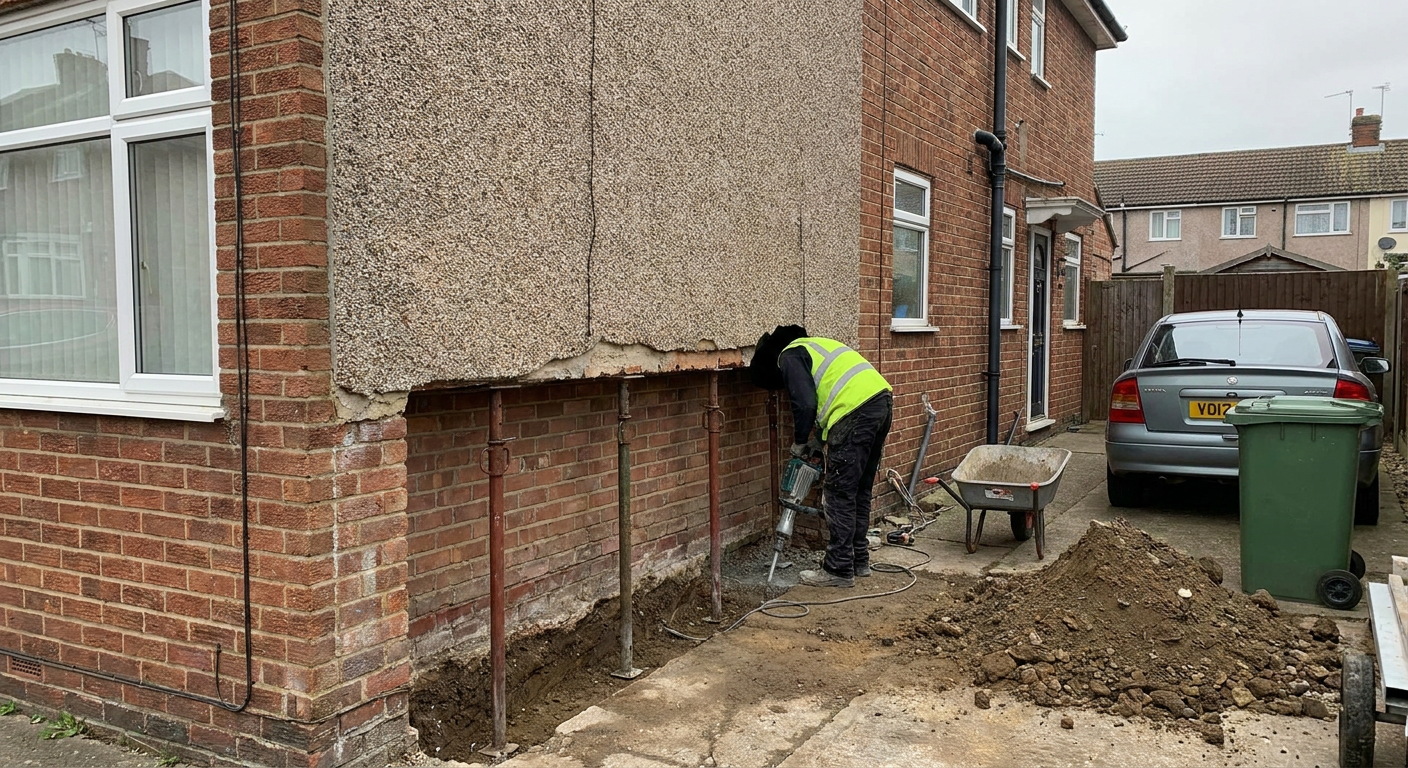
When the ground near the surface cannot support the weight of a house, the foundation needs to go deeper. Mass concrete underpinning is the traditional way to do this. A specialist firm excavates short sections beneath the existing footing one at a time and fills each void with fresh concrete. This creates a new, deeper base without disturbing the rest of the wall above.
The work moves in a strict sequence so the building never loses support during the dig. It suits older homes in Preston where the original footings are shallow and the clay beneath them has shrunk after a dry summer.
Read how [mass concrete underpinning](/underpinning/mass-concrete) works step by step. For houses and extensions specifically, the approach to [residential underpinning](/underpinning/house-underpinning-preston) follows the same principles but accounts for the layout of the building.
Reaching stable ground with mini piles
Sometimes the weak soil goes too deep for mass concrete to be practical. Old mill sites, filled ground or areas close to the Ribble often have soft layers several metres down. In these cases, a specialist firm uses mini piled underpinning.
Steel-cased piles are driven or bored through the unstable material until they reach a load-bearing stratum. A reinforced concrete beam then transfers the weight of the house onto the piles. Because the equipment is small, it fits into tight gardens and narrow side returns typical of terraced streets.
Find out when [mini piled underpinning](/underpinning/mini-piled) is the right choice. Terraced houses present particular access problems, so the process of [underpinning a terraced house](/insights/underpinning-a-terraced-house-in-preston-what-differs) differs from a detached property.
Lifting and filling voids with resin injection
Not every sinking foundation requires excavation. Where the ground has compacted or small voids have opened beneath a slab, a specialist firm can use resin injection. Structural resin is pumped through small holes drilled in the floor or the external wall. It expands as it cures, filling gaps and gently lifting the settled concrete back towards its original level.
This method causes far less disruption than digging. There is no spoil to remove and the resin sets within hours. It suits garage floors, conservatory bases and extensions where the main house remains stable but the newer addition has dropped.
Read about [resin injection](/underpinning/resin-injection-preston) for sinking foundations. The broader options for [foundation repair](/underpinning/foundation-repair-preston) include resin alongside the heavier methods, depending on what the survey finds.
Tracking movement and repairing cracked walls
Before any heavy work begins, a specialist firm may need to monitor the building over several months. Crack monitoring uses small gauges fixed across a fracture to record whether it is still opening, closing or staying put. This data tells the engineer whether the movement is seasonal or progressive.
Once the structure is stable, the visible damage needs attention. Crack repair covers everything from stitching brickwork with helical bars to replacing rusted lintels and repointing mortar joints. The goal is to restore strength and keep weather out.
See how [structural monitoring](/underpinning/structural-monitoring-preston) tracks wall movement over time. For the masonry itself, the methods used in [crack repair](/underpinning/crack-repair-preston) depend on the width and location of the damage.
Digging down to create a basement
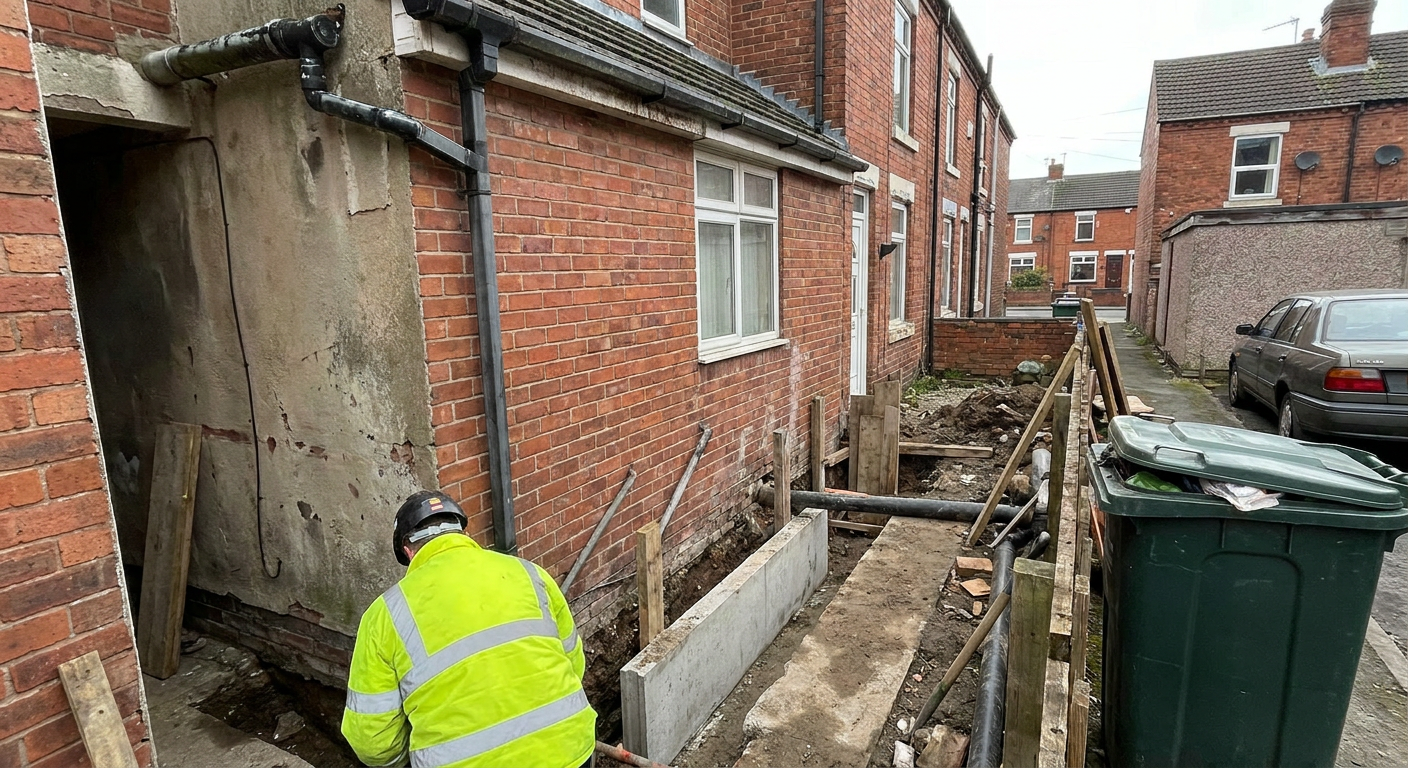
Some homeowners want to add living space below ground rather than extending outward. Basement underpinning strengthens and lowers the existing foundations so the cellar can be dug out safely. A specialist firm works in carefully planned bays, supporting the house while removing soil and pouring new, deeper footings.
Because the work happens directly beneath the occupied rooms, it demands precise engineering and constant checking. Building control approval is always required before excavation starts.
Read about [basement underpinning](/underpinning/basement-underpinning-preston) for cellar conversions. The rules around [building control approval](/insights/building-control-approval-for-underpinning-in-preston) apply to all structural alterations, including lowering a floor.
Choosing who does the work
Every method described here is carried out by separate specialist firms. The type of ground beneath your home dictates which firm is appropriate. Boulder clay behaves differently from the alluvial silt found nearer the river, and made ground left over from industrial use presents its own risks.
Selecting the right contractor means matching their equipment and experience to your specific problem. A firm that only does resin injection will not be the one to call if your house needs mini piling.
Guidance on choosing [underpinning contractors](/underpinning/contractors) explains what to look for. Understanding the geology helps too: [boulder clay and glacial till](/insights/boulder-clay-and-glacial-till-beneath-preston-homes) affect many Preston postcodes, while [homes near the Ribble](/insights/homes-near-the-ribble-soft-alluvial-ground-and-silt) sit on softer deposits.
Tell us what you have noticed at your home
Send a description of the problem and where your home is. The details go to a specialist firm who can advise you, and asking costs nothing.
- No obligation to proceed
- Free initial advice
- Local specialists only
Underpinning
- Subsidence survey
A subsidence survey in Preston checks cracks, movement and foundations, and sets out what the findings mean for repair options.
- Mass Concrete
Mass concrete underpinning in Preston deepens foundations in short sections with poured concrete, suiting shallow footings on clay or made ground.
- Mini Piled
Mini piled underpinning in Preston uses narrow piles taken down to firmer ground, suiting tight access, deeper movement or weak soil under a house.
- Resin Injection
Resin injection ground stabilisation in Preston firms up weak soil under foundations. Find out when it suits subsidence and when underpinning is needed.
- Crack Monitoring
Structural monitoring in Preston records crack width over months so you can see whether movement is ongoing or has settled. Learn what readings show.
- Crack Repair
Crack repair in Preston covers stitching, repointing and filling cracked brickwork. See which cracks are cosmetic and which point to foundation movement.
- Basement Underpinning
Basement underpinning in Preston lowers cellar floors and strengthens walls for extra headroom. Learn what the work involves and which homes suit it.
- House Underpinning
Residential underpinning in Preston suits homes with subsidence cracks, sloping floors and sticking doors, from first survey to strengthened foundations.
- Foundation Repair
Foundation repair in Preston deals with cracked, settling or washed out footings. See what causes the movement and which repair methods suit each house.