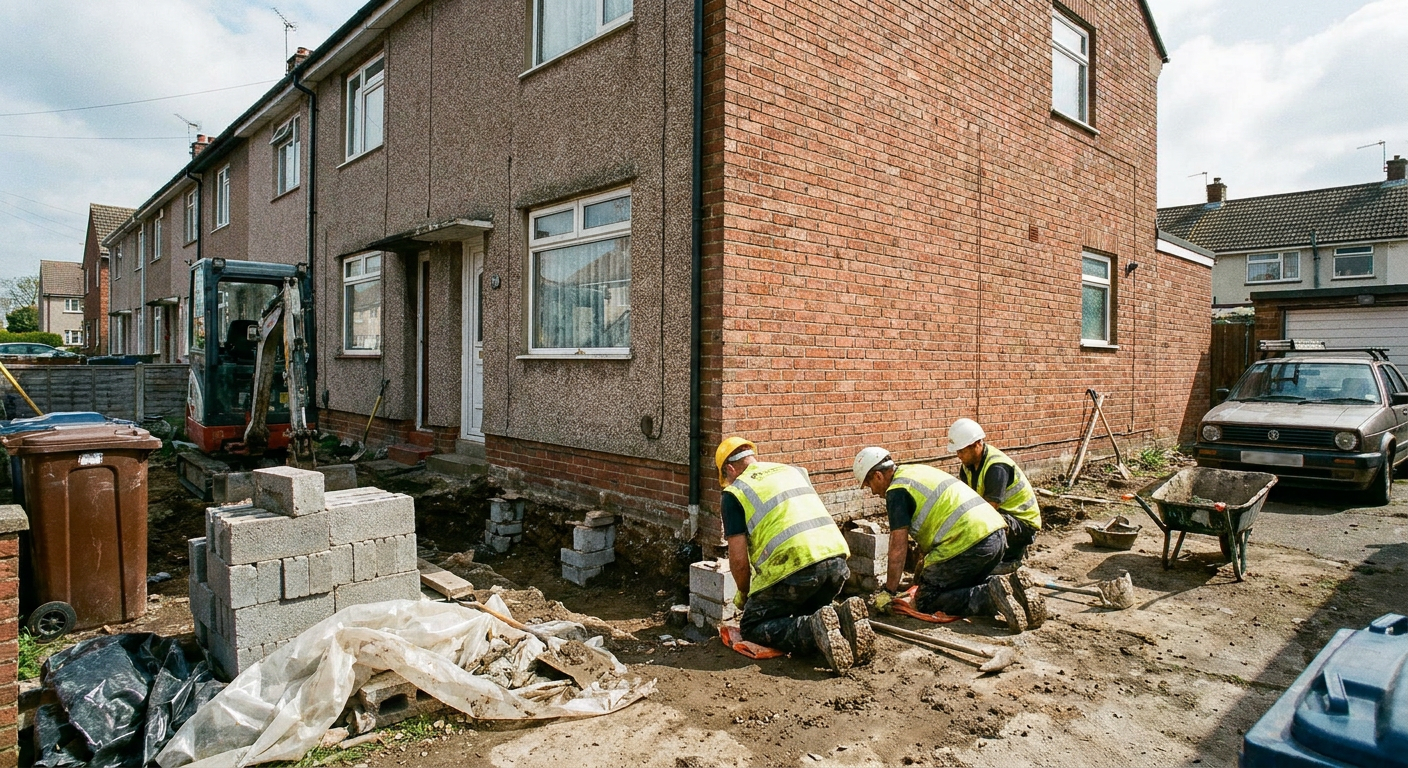
Preston guides
Underpinning and subsidence guides for Preston homes
Read the guides below to find out what a crack means, when a survey is needed, or how foundation repair works. If you want someone to look at your home, ask for a quote. There is no charge for an enquiry.
Guides on subsidence, ground conditions and repairs
What cracks in brickwork actually mean
A line appearing in plaster or mortar does not automatically mean your home is sinking. Hairline cracks happen as buildings settle over time, especially after new plaster dries or during cold weather.
Stepped cracks following the mortar joints in brickwork are different. They often point to movement in the foundations beneath the wall. Measuring the width of a crack gives a specialist firm a starting point for deciding whether monitoring is required before any repair takes place.
Sticking doors and windows sometimes accompany this movement. Frames distort when the walls around them shift, so a door that jams in summer might be reacting to soil drying out rather than a broken hinge. Understanding these signs helps you decide whether to watch the crack or ask for a structural assessment.
Clay, drains and trees near your foundations
Much of Preston sits on clay. Clay shrinks when it dries and swells when it gets wet. After a long dry spell, the ground beneath a house can contract enough to pull the foundations down with it. Homes near the River Ribble face a different problem: soft alluvial ground and silt that compresses under weight.
Tree roots extract moisture from clay soil. A large tree planted too close to a wall can draw enough water out of the ground to cause localised shrinkage. The distance matters, and so does the species.
Leaking drains wash away fine soil particles over months. The resulting void leaves the foundation without support. Finding the leak stops the movement, but the damage already done still needs attention. Each of these causes requires a different response, so identifying the source comes before choosing a repair method.
When a subsidence survey is needed
If you have measured a crack wider than a few millimetres, or if cracks keep returning after you fill them, a subsidence survey establishes what is happening below ground level. The specialist firm digs trial holes, examines the existing foundations and records the soil type.
In some parts of Preston, older properties were built on made ground left behind by mills. This fill material behaves differently from natural soil and compacts unevenly. A survey identifies whether the original builders placed the footings deep enough to reach stable ground.
Once the survey is complete, the report sets out whether the movement is historic (it happened once and stopped) or active (it is still happening). Active movement usually requires intervention. Historic movement might only need cosmetic crack repair and ongoing monitoring to confirm nothing has changed.
Underpinning methods used in Preston
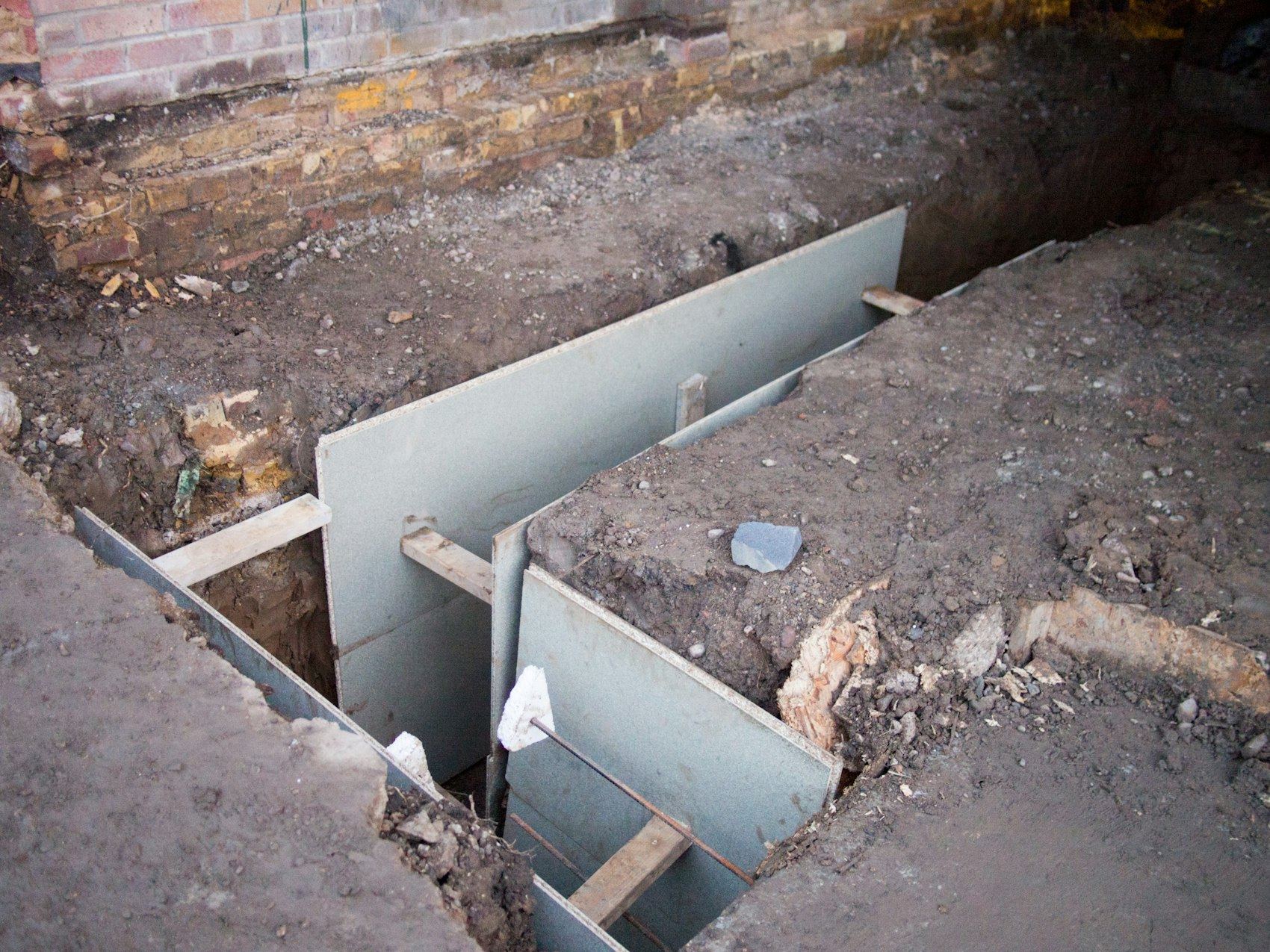
Mass concrete underpinning involves excavating sections beneath the existing foundation and pouring new concrete in stages. It suits homes where the original footings are shallow and the good bearing strata is within reach.
Mini piled underpinning goes deeper. Steel-cased piles are driven or bored through weak soil until they rest on a firm layer, sometimes several metres down. This method is common where the ground near the surface is unreliable, such as on old industrial sites or very soft clay.
Resin injection offers another approach. Expanding resin is pumped into the ground beneath the footing, compacting loose soil and lifting the foundation back toward its original level. It avoids extensive excavation, which matters when access is tight or the homeowner wants less disruption.
The choice depends entirely on the soil, the building and the extent of the movement. A specialist firm recommends the right method after reviewing the survey findings.
Terraced houses, basements and extensions
Working on a terraced house differs from working on a detached one. The shared party wall means the underpinning sequence must protect the neighbour's structure at every stage. Vibration limits and temporary supports require careful planning.
Basement conversions involve lowering the floor level, which means extending the existing foundations downward. The specialist firm removes soil in small bays and replaces it with deeper concrete or reinforced walls to carry the extra load.
Extensions add weight to ground that was never designed for it. If the new section sinks relative to the old house, a crack opens where they join. Foundation repair addresses the differential settlement so both parts of the building move together again.
Arranging the work and keeping records
Building control approval is required for most underpinning in Preston. The specialist firm submits structural calculations and method statements to the local authority before digging begins. Inspections happen at each stage.
After the job finishes, you receive documentation showing what was done, where and why. Keep these records. If you sell the home later, buyers and their mortgage lenders will ask for proof that the work was carried out properly and signed off by building control.
Choosing a contractor means checking they understand local ground conditions and hold the right insurance. Ask how they plan to protect drainage, services and neighbouring structures while the excavation is open.
Tell us about the problem at your home
Send a short description of what you have noticed. An adviser will read it and let you know whether a specialist firm should visit. You are not committing to any work by asking.
- No obligation to proceed
- Free initial enquiry
- Local ground knowledge