Preston
How underpinning work happens, step by step
Describe what you have noticed at your home and find out if it needs attention. An initial conversation costs nothing and carries no obligation to proceed with any work.
What shapes the cost of foundation work
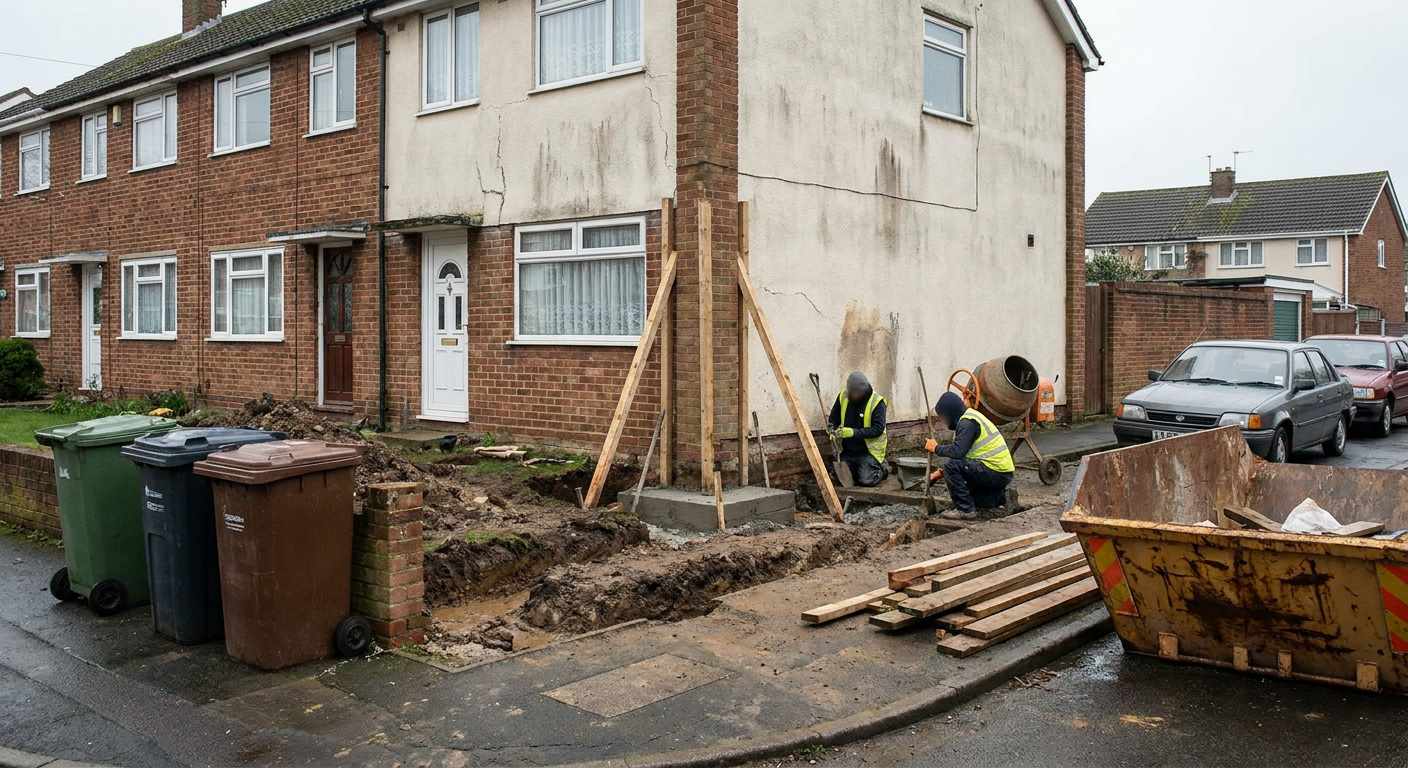
Every home sits on different ground, so every job requires a different approach. The specialist firm assesses the specific conditions before setting out what is needed.
- Soil type beneath the home
- Boulder clay, alluvial silt or made ground each demand a different method, changing the materials and time required.
- Depth of stable ground
- Deeper load-bearing strata mean longer piles or more excavation, which increases the scale of the work.
- Access around the building
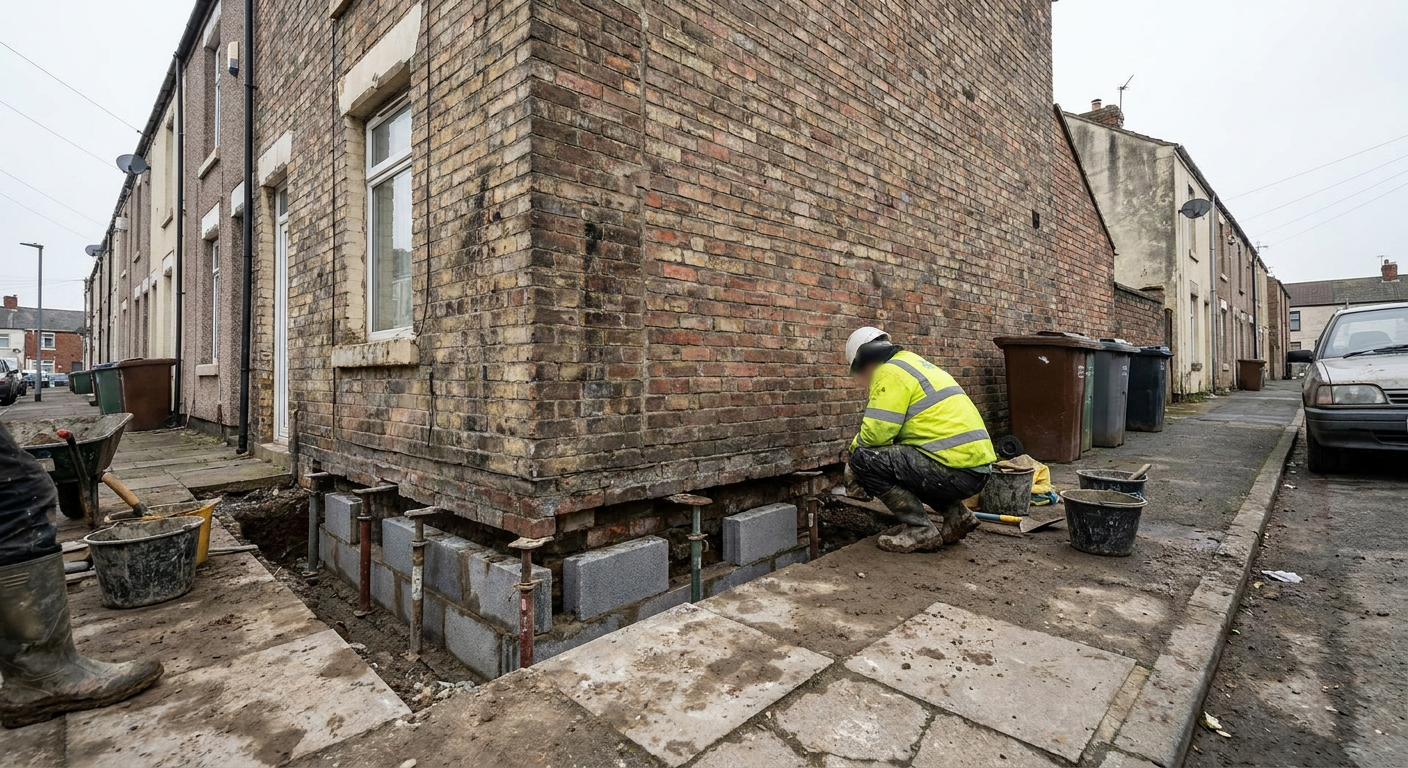
- Terraced houses or tight side returns restrict machinery size, so the specialist may need smaller plant or manual excavation.
- Extent of the movement
- A single corner dropping requires less intervention than widespread settlement affecting multiple walls and floors.
The specialist firm explains the full cost of the particular job before anything is agreed.
Checks carried out before work begins
A specialist firm follows a fixed sequence so that symptoms are not confused with causes. Each check narrows down the problem until the right repair becomes clear.
-
Visual inspection of cracks
The specialist examines where cracks appear, their width and direction. Stepped cracking in brickwork points to different movement than vertical splits in plaster.
-
Drainage and leak testing
Water escaping from drains washes soil away from foundations. A pressure test rules this out or confirms it as the cause of subsidence.
-
Soil investigation
Trial holes or boreholes reveal what lies beneath the footings. Clay shrinks when dry; sand shifts when wet. The soil dictates the repair method.
-
Monitoring over time
Crack gauges track whether movement is active or historic. If the crack stays still for months, heavy intervention might be unnecessary.
If the findings point in different directions, further monitoring or a second opinion settles the matter before any repair starts.
Ask about what you have noticed
Send details of the problem at your home. The information goes to a specialist firm who will call back to discuss whether the issue needs action. It commits you to nothing.
- No obligation
- Free initial discussion
- Local specialists