
Preston homes
Doors sticking and windows jamming in the frame
Find out whether a sticking door is damp, worn hinges or ground movement. Send your details for a free look at what might be happening in your home.
Why doors stick and windows jam in Preston homes
Damp, worn hinges and structural movement all cause doors sticking and windows jamming. Learn how to tell them apart before calling anyone out.
Seasonal swelling versus structural movement
A back door that sticks every winter but frees up in summer is almost always reacting to moisture. Timber absorbs water during wet months and expands, which is why doors stick in winter across Preston. The wood swells against the frame, usually along the top edge or the lock side, then shrinks back when central heating dries the air out.
Ground movement behaves differently. If the soil beneath your home shifts, the frame distorts permanently. A door sticking at the top frame year-round, regardless of the weather, points away from seasonal damp. Homes built on the boulder clay found beneath much of Preston are prone to this kind of shrinkage and heave. You can read more about [clay soil and cracked walls](/cracks/clay-soil-and-cracked-walls) to understand how the ground behaves here.
The test is simple. Mark where the door binds with a pencil. Check again after a dry spell. If the mark moves, the timber is breathing. If it stays exactly where it was through changing seasons, something else has pulled the opening out of shape.
Telling a square frame from a distorted one
You can check if a door frame is out of square rather than just swollen by measuring its diagonals. Take a tape measure from the top left corner to the bottom right, then repeat from top right to bottom left. In a true rectangle, those two numbers match. If they differ by more than a few millimetres, the frame has been twisted by movement.
Swollen timber keeps the geometry intact. The door might drag, but the corners remain at ninety degrees. A frame out of square in a house means the wall around it has shifted. That distortion often shows up as a gap that widens towards one corner, or a latch that no longer lines up with the strike plate even when the door is forced shut.
When several doors upstairs start catching at once, the problem is rarely humidity affecting every room identically. Multiple sticking points on one floor suggest the structure itself has moved. These are recognised [house movement warning signs](/cracks/survey-flagged-movement-preston) and warrant a closer look by someone who understands foundations.
Worn hinges and mechanical faults
Worn hinges can make a door bind badly. Over years, the screws loosen in the timber, the metal wears thin, and the door drops on its outer edge. It drags along the carpet or catches the threshold. This is a mechanical fault, isolated to that single fitting.
Lift the door slightly by the handle. If there is play, the hinge pins are worn or the screws have lost their grip. Tightening or replacing the hardware usually solves it. The same logic applies to windows. Understanding [upvc window jamming causes](/cracks) helps rule out broken mechanisms before worrying about the ground beneath the house.
Mechanical wear affects one door. Movement affects several openings, often on the same wall or floor. If a window will not close properly and the frame measures out of true, new hinges will not fix the underlying geometry. The specialist firm will need to establish why the wall moved before addressing the joinery.
What happens when frames are pulled out of shape
If the frames have been pulled out of square by foundation movement, a specialist does not start by planing the wood. Removing material to force a door shut treats the symptom while ignoring the cause. The ground must be addressed first.
The initial step is a [subsidence survey](/underpinning/subsidence-survey-preston). The specialist examines the soil, checks drainage for leaks that wash fines away, and maps the cracking pattern. They may install monitoring pins to track whether the movement is active or historic. Read about [crack monitoring](/underpinning/structural-monitoring-preston) to see how that data is gathered over time.
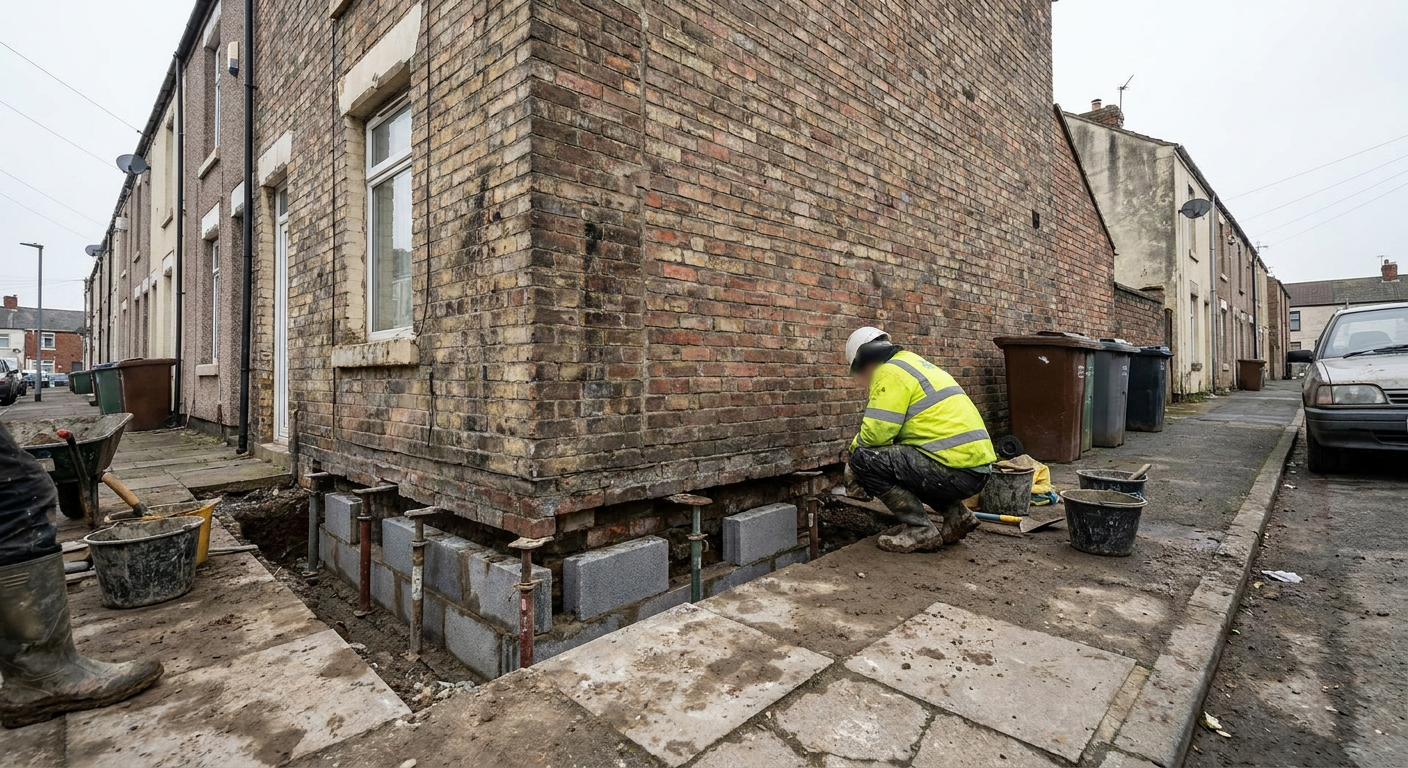
Only once the cause is known can the right repair be chosen. In some parts of Preston, [mass concrete underpinning](/underpinning/mass-concrete) is used to extend the foundation depth. Where access is tight or the ground is poor, [mini piled underpinning](/underpinning/mini-piled) transfers the load deeper. On suitable sites, [resin injection](/underpinning/resin-injection-preston) stabilises the soil without excavation. The choice depends entirely on what the survey finds beneath your home.
Whether to plane the door or wait
Planing a door down before a specialist has looked at the movement risks making the problem worse. If the ground is still shifting, the frame will continue to distort. You end up shaving off more timber each season until the door is too thin to function or leaves a draught you cannot seal.
Leave the joinery alone until the structural question is settled. If the movement is historic and the building has stopped settling, a carpenter can trim the door to fit the new shape safely. But if the movement is ongoing, trimming only buys a few weeks.
Jamming windows on their own, without visible cracks in the plaster, still justify a visit if the frames measure out of square. Brickwork hides a lot of strain before a crack reaches the surface. Catching the distortion early means the repair is often simpler. [Foundation repair](/underpinning/foundation-repair-preston) options vary depending on how far things have progressed, so timing matters.
What shapes the cost of fixing movement
Every home sits on different ground and moves for different reasons, so the scope of work changes from job to job.
- Cause of the movement
- Clay shrinkage, drain leaks and made ground each demand a different repair method and timescale.
- Depth of stable ground
- Deeper bearing strata mean longer piles or more excavation to reach solid support.
- Access around the home
- Restricted space limits machinery size, sometimes requiring hand digging or smaller rigs.
- Number of affected walls
- Movement spanning multiple elevations increases the extent of underpinning needed.
The specialist explains the full cost of your specific job before any work is agreed.
Deciding between a carpenter and a surveyor
Knowing who to call first saves time and prevents a cosmetic fix from hiding a structural fault.
Carpentry adjustment
- When it fits
- One door sticks seasonally or a hinge is visibly loose.
- What changes
- Timber is trimmed or hardware is replaced to fit the frame.
- Effect on the home
- Solves local friction without altering the structure.
- Follow-up work
- Usually none, unless the timber swells again next winter.
Structural survey
- When it fits
- Multiple openings jam, or frames measure out of square.
- What changes
- The ground and foundations are investigated to find the cause.
- Effect on the home
- Identifies whether the building is still moving and why.
- Follow-up work
- May lead to underpinning, resin injection or drain repairs.
A specialist advises which route suits your home after examining the frames and the ground.
Ask for a look at your home
Send a description of which doors or windows are sticking and where you live in Preston. The details go straight to a specialist firm. There is no obligation to accept any subsequent proposal.
- No fee to enquire
- Local specialists only
- No commitment required