Preston guides
Cracks in walls advice for Preston homes
Read through the notes below to understand what is happening to your home. When you are ready, send an enquiry about the problem. There is no charge for that first conversation.
Understanding the ground beneath Preston
The soil under a house determines how it moves. Much of Preston sits on boulder clay and glacial till, which shrinks when it dries out and swells when it gets wet. That cycle pulls at shallow foundations and opens cracks in brickwork. Homes closer to the river sit on different ground entirely. The soft alluvial deposits and silt near the Ribble compress under weight, so houses there can sink slowly over years rather than shifting with the seasons.
Older parts of the town carry another complication. Former mill sites and areas of made ground were filled with rubble, ash or loose soil before houses went up. That fill settles unevenly. If your home is in Ingol or Tanterton, the walls may be reacting to ground conditions specific to those estates. Reading about the geology beneath your street helps you make sense of what a crack means before anyone visits.
Reading the signs in your walls
A crack does not always mean subsidence. Hairline cracks appear as plaster dries or timber shrinks. Stepped cracks that follow the mortar joints in brickwork tell a different story. They usually show that one part of a wall has dropped relative to another. You can measure a crack at home with a ruler to see if it falls within limits that need attention.
Sticking doors and jamming windows often point to the same movement. Frames twist when the walls around them shift, so a door that catches in summer might close freely in winter. New cracks appearing after a dry spell suggest shrinking clay. Trees planted too close to a house draw moisture from the ground and accelerate that shrinkage. A leaking drain washes soil away from the foundation instead. Each cause requires a different fix, so working out which one applies to your home matters before any digging starts.
Surveys and monitoring before work begins
Guessing at the cause of movement leads to wasted money. A subsidence survey establishes whether the ground is still moving or settled long ago. The specialist firm digs trial holes, checks drain runs and records crack widths across the affected walls.
If the answer is not obvious, structural monitoring tracks the building over months. Small gauges fixed across a crack record every fraction of a millimetre of change. Those readings show whether movement is seasonal, progressive or finished. Once the data exists, the right repair method follows from it. Building control approval is normally required before underpinning goes ahead, so the paperwork forms part of the process rather than an afterthought.
Methods used to stabilise Preston homes
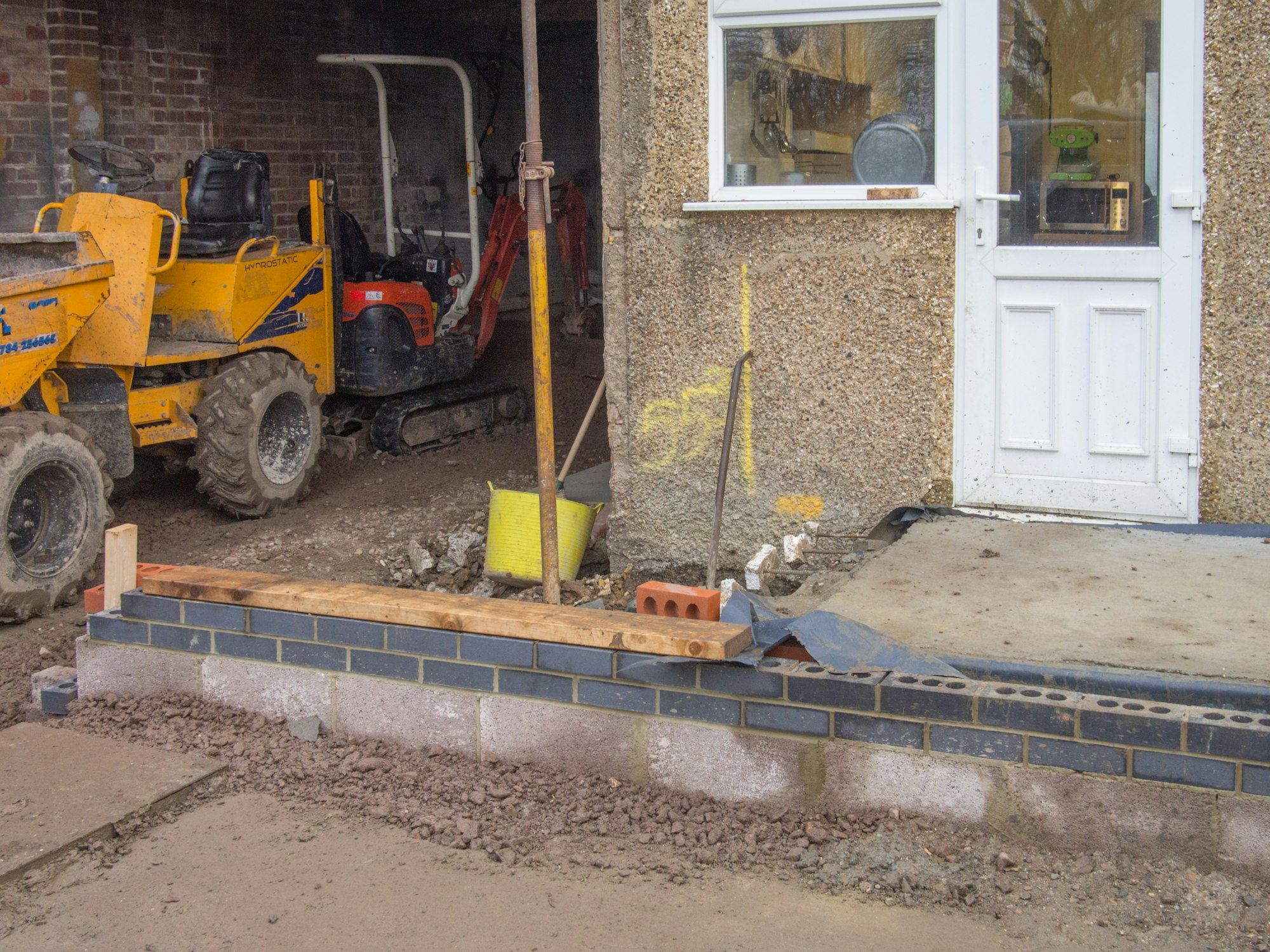
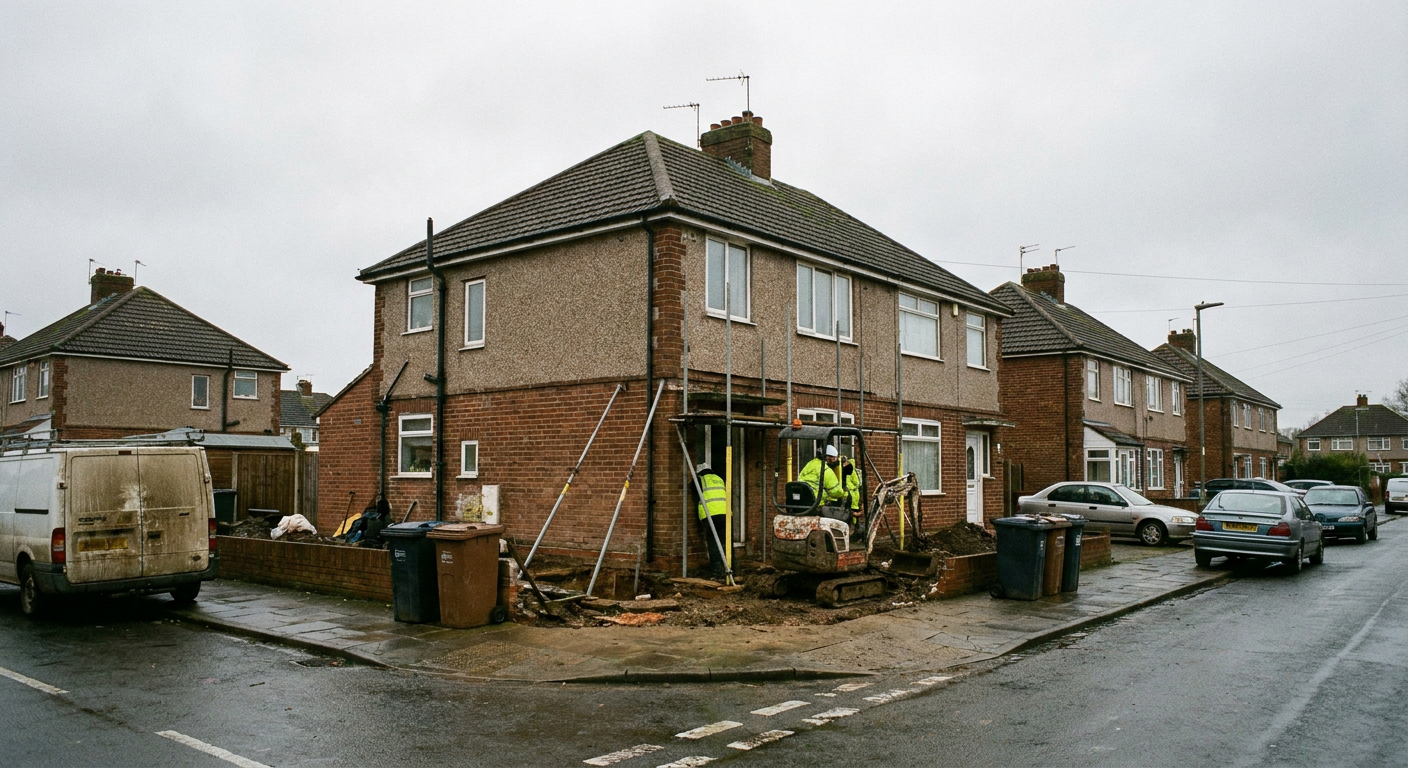
Different problems call for different repairs. Mass concrete underpinning involves excavating sections beneath the existing foundation and pouring new concrete in stages. It suits heavier buildings on stable but inadequate footings. Mini piled underpinning reaches deeper, transferring the load of the house past weak soil to a firmer layer below. Resin injection offers a lighter approach for sinking foundations where access is tight or excavation would cause too much disruption.
Terraced houses present their own constraints. Shared walls and narrow passages between properties limit what machinery can reach, so the method chosen for a mid-terrace often differs from one used on a detached house. Basement underpinning lowers a cellar floor while strengthening the walls around it, usually as part of a conversion. For houses and extensions showing early signs of trouble, foundation repair might involve nothing more than localised strengthening rather than full underpinning.
Repairing the damage once movement stops
Stabilising the foundations comes first. After that, the visible damage needs attention. Crack repair covers rebuilding fractured brickwork, replacing rusted lintels and repointing mortar joints that have opened up. Leaving cracked masonry exposed allows water in, which causes further deterioration during freezing weather.
Keep every document relating to the work. Records of surveys, monitoring charts, building control certificates and guarantees matter when you sell the house. Buyers and their solicitors will ask for proof that the problem was identified correctly and resolved properly. Walton-le-Dale and Lostock Hall residents dealing with subsidence face the same expectations from mortgage lenders as those in central Preston.
Choosing who does the work
Underpinning contractors operate across the area, but not every firm uses the same methods or carries the same equipment. Choosing a firm means checking they have done similar work on similar ground. A company experienced in mass concrete might not offer resin injection, and vice versa.
Enquiries come through this site and go to specialist firms capable of handling the specific problem described. The arrangement keeps the process straightforward: you explain what you see, and the right contractor takes it from there. Every guide here exists to help you describe that problem accurately before you pick up the phone.
Ask about the movement in your home
Send a short description of what you have noticed. The details go to a specialist firm who will reply with next steps. There is no obligation to proceed beyond that conversation.
- No fee to enquire
- Specialist replies directly
- No commitment required
Crack guides
- Stepped cracks
Stepped cracks in brickwork follow the mortar joints in a staircase pattern. Read what causes them, which ones matter and what to check next.
- Measuring cracks
How wide is a serious crack? A simple way to measure a crack in a wall at home, what the common width bands suggest and when a survey is sensible.
- Sticking doors
Doors sticking and windows jamming can point to foundation movement rather than swollen timber. What to check around frames and when to ask for a survey.
- Dry summer cracks
New cracks after a dry summer often follow clay shrinking under the foundations. Find out what to check at home and when a Preston survey makes sense.
- Clay soil cracks
Clay soil shrinks in dry weather and swells when it rains, and that movement can leave cracked walls above. What to look for in Preston homes.
- Leaking drains
A leaking drain can soften or wash away soil under a foundation, causing subsidence. See the signs, the usual drain checks and what happens next.
- Trees near walls
Tree roots near foundations can dry out clay soil and leave walls cracking. Find out how close a tree can be to a house in Preston and what to check first.
- Survey movement
A survey found structural movement at your home: what the report means, which checks come next, and how underpinning or monitoring may follow in Preston.
- Help and Advice