Ashton-on-Ribble
Subsidence survey in Ashton-on-Ribble homes
Send details of what you have noticed at your home. A subsidence specialist in Ashton-on-Ribble will review them and explain whether a site visit is needed, with no charge for that first look.
Subsidence surveys across Ashton-on-Ribble
A subsidence survey in Ashton-on-Ribble starts from the ground conditions specific to this part of Preston. The specialist firm reviews the history of the plot and the behaviour of the walls before recommending any further investigation or repair.
- Dock-side made ground
- Reclamation fill near the old docks varies significantly in compaction across small plot boundaries, so two neighbouring houses can sit on very different support.
- High water table
- Proximity to the Ribble keeps groundwater levels high, which affects how foundations behave and limits the methods available for stabilising a house.
What the signs at your home might mean
Cracks and sticking doors appear for many reasons. On dock-related fill, the cause is often uneven settlement rather than seasonal clay shrinkage, so reading the pattern matters before anyone suggests a fix.
- Cracks above the bay window on my terrace
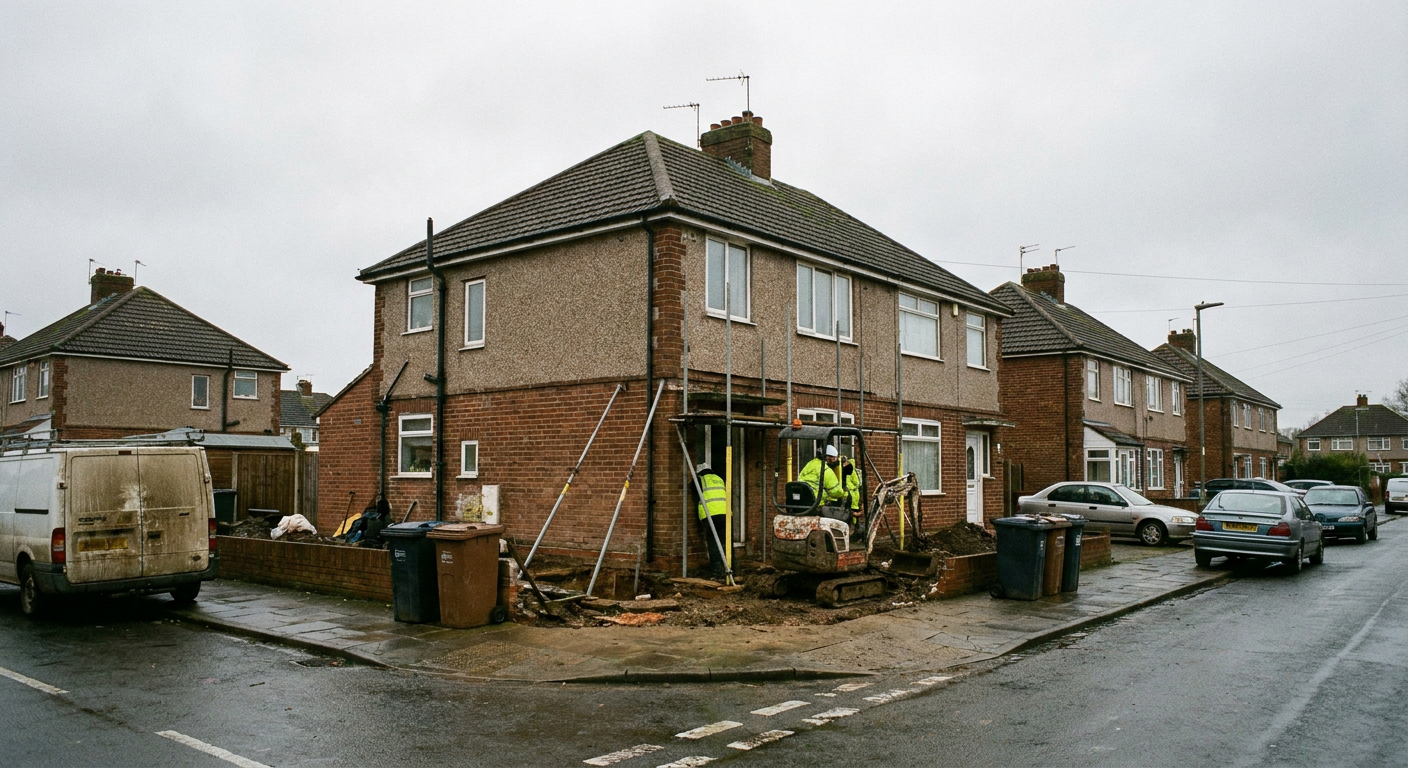
- Bay windows project beyond the main wall and settle independently. A structural survey in Ashton-on-Ribble determines whether the movement is ongoing or historic.
- Doors jamming after wet weather
- Made ground absorbs water unevenly, causing localised heave. Crack monitoring in Preston tracks the direction and rate of movement over several months.
- Diagonal cracks wider at the top
- Differential settlement on variable fill often produces tapering cracks. Measuring the width helps decide if foundation problems near Preston docks need urgent attention.
- Gaps opening around skirting boards
- Floors dropping away from walls suggest the ground beneath is consolidating. A site visit establishes whether house movement near the Ribble in Preston is active.
Foundation services for homes in Ashton-on-Ribble
The ground beneath this area dictates which method suits a particular house. Each option responds to the variable fill and the water table found here.
-
Subsidence survey in Ashton-on-Ribble
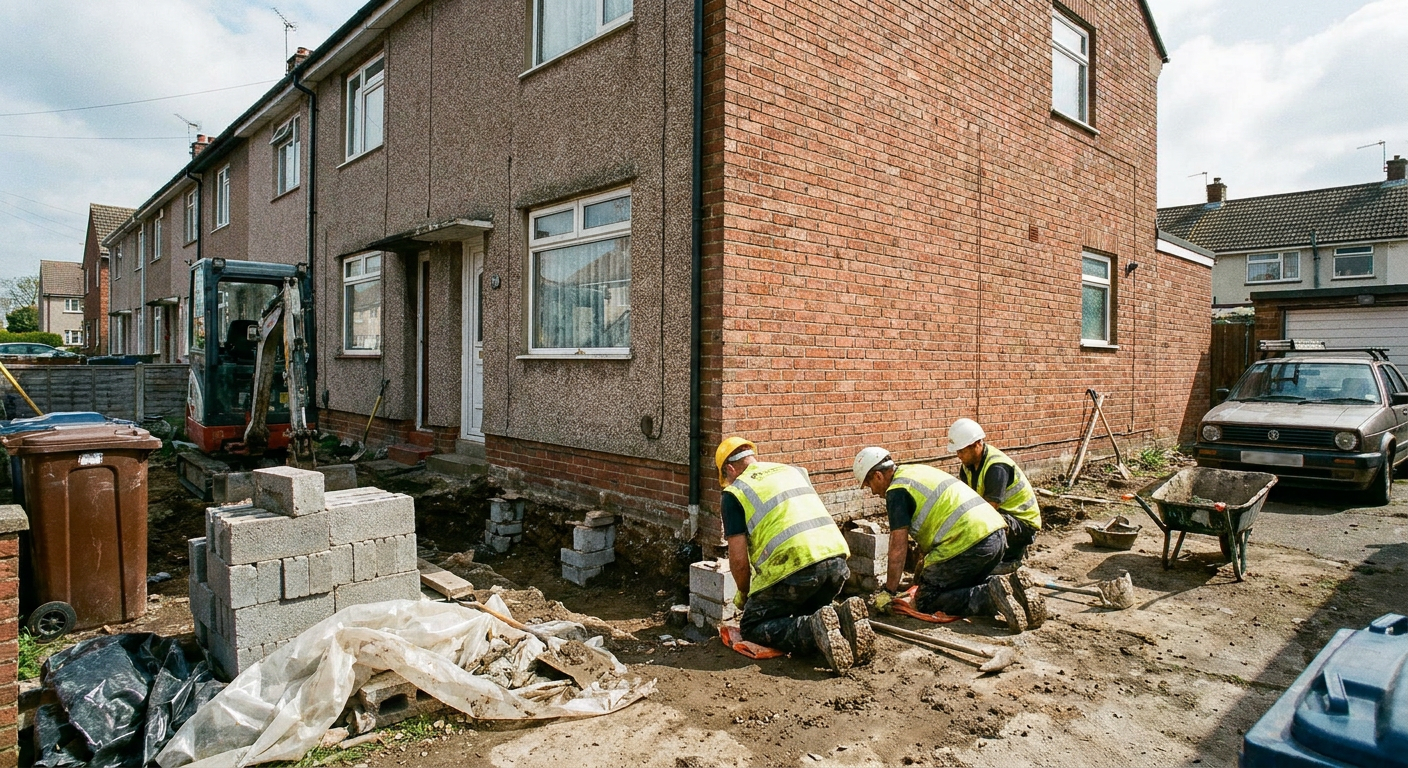
The specialist visits the home to map cracks, check drainage and assess the made ground. Trial holes may be dug in the garden to inspect the footings directly, and any disturbed soil is reinstated before they leave.
-
Mass concrete underpinning in Ashton-on-Ribble
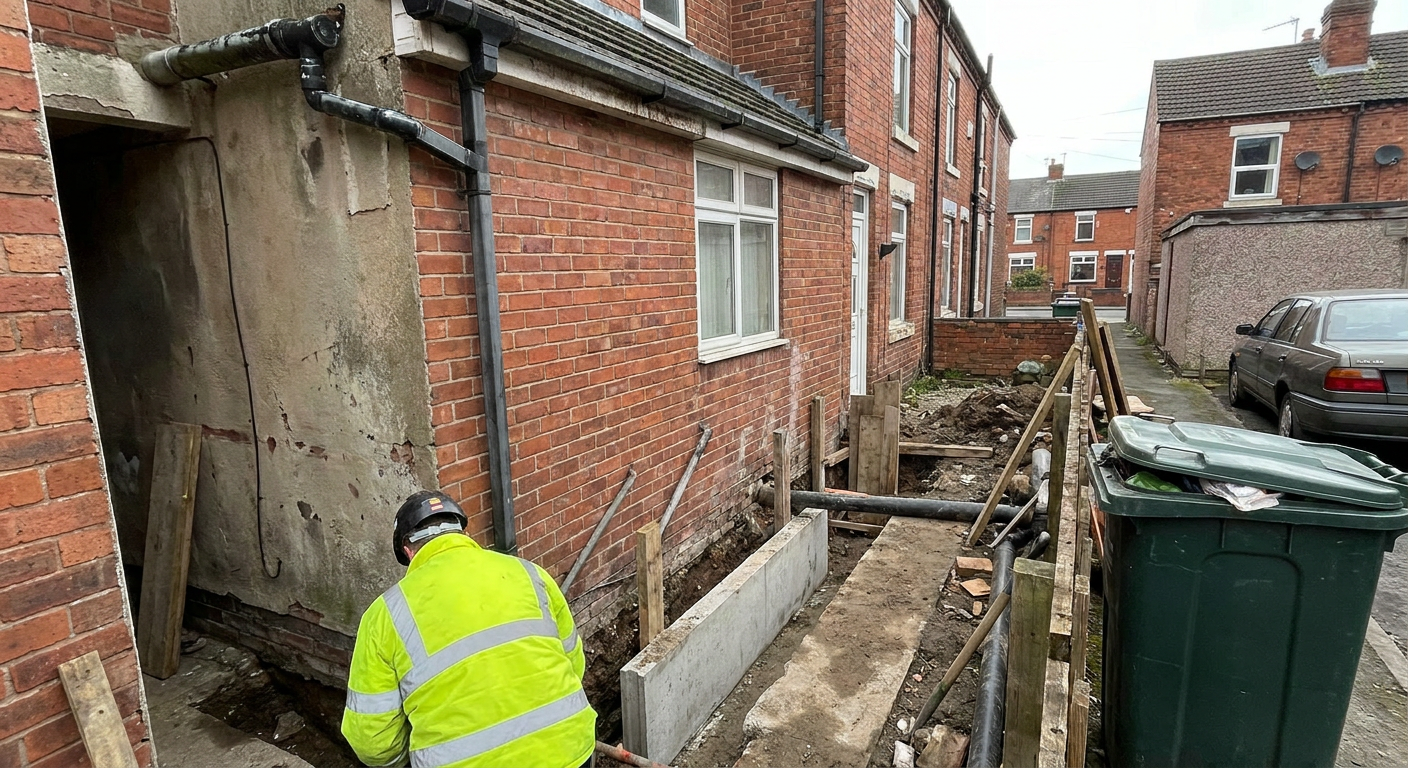
Where shallow fill allows it, mass concrete underpinning in Ashton-on-Ribble replaces weak soil beneath the existing footing with poured concrete, dug in short bays to keep the wall supported throughout the pour.
-
Mini piled underpinning in Ashton-on-Ribble
On deeper reclamation fill, mini piled underpinning in Ashton-on-Ribble transfers the load of the house past the variable material down to a competent stratum using driven or bored steel piles.
-
Resin injection ground stabilisation in Ashton-on-Ribble
Resin injection ground stabilisation in Ashton-on-Ribble fills voids within loose fill and compacts the surrounding soil. The specialist checks the water table first, since saturation limits how well resin cures.
-
Structural monitoring in Ashton-on-Ribble
Structural monitoring in Ashton-on-Ribble uses fixed points on the wall to record movement over weeks or months. The specialist checks whether settlement has stopped or is still active, which determines if further work is needed. On dock-related fill near Tulketh Road, readings help distinguish ongoing subsidence from old, stable cracks.
-
Crack repair in Ashton-on-Ribble
Once movement is arrested, crack repair in Ashton-on-Ribble restores the masonry. The specialist stitches or repoints the brickwork and addresses any damaged lintels around bay windows. Victorian terraces here often show cracking above projecting bays, so the repair method must suit the original construction rather than a modern cavity wall detail.
-
Basement underpinning in Ashton-on-Ribble
Basement underpinning in Ashton-on-Ribble lowers a cellar floor while supporting the existing walls. Because the high water table near the Ribble makes excavation wetter, the specialist sequences the dig carefully and installs temporary support before pouring new concrete. This prevents surrounding ground from washing into the open trench during the work.
-
House underpinning in Ashton-on-Ribble
House underpinning in Ashton-on-Ribble covers full perimeter work where the original footings no longer suit the ground. Terraces built over former dock land often sit on fill that varies in compaction between neighbouring plots, so the specialist designs the scheme to match the actual soil conditions beneath each section of wall.
-
Foundation repair in Ashton-on-Ribble
Foundation repair in Ashton-on-Ribble addresses localised failures without always needing a complete underpinning scheme. Where dock-related reclamation fill varies significantly across small plot boundaries, one corner of a home may drop while the rest stays level. The specialist targets only the affected section, stabilising the footing and preventing further distortion.
Towns and districts covered near Preston
Enquiries are taken for homes across Preston and its surrounding areas. The right specialist firm is assigned based on the location and the type of ground problem described.
If your street is not listed, send an enquiry anyway. Coverage extends across the wider borough.
Ask about your home in Ashton-on-Ribble
Send a description of what you have noticed. The details go directly to a specialist who will advise on next steps. There is no fee for this initial review and no obligation to proceed.
- No fee for the review
- No obligation to proceed
- Direct to a specialist