Drainage and foundations
Can a leaking drain cause subsidence?
Describe the crack and the smell outside your home. A specialist firm reviews the details and arranges a survey where needed, with no charge for that first look.
When drainage causes house movement in Preston homes
How a broken drain leads to washed out soil under foundations
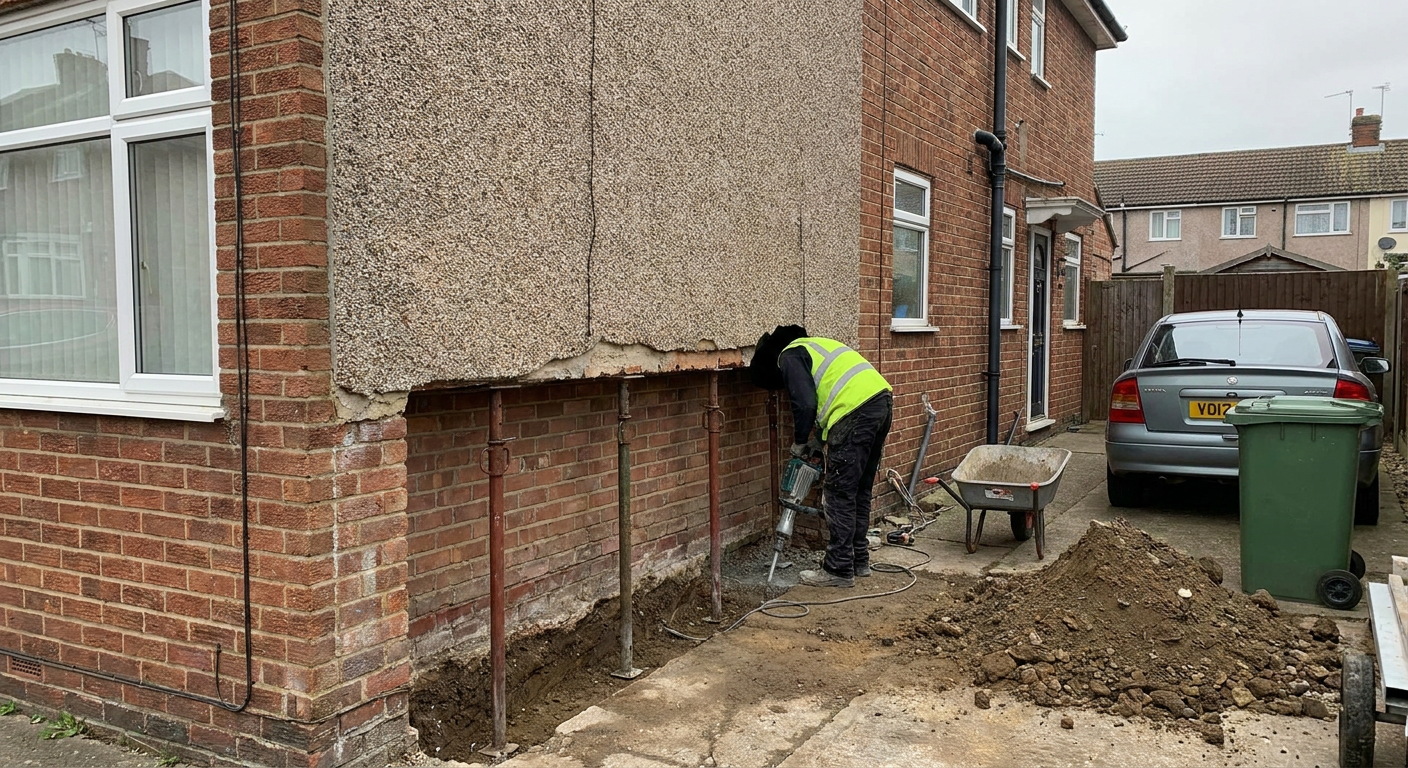
A leaking pipe beneath or beside a home washes fine particles out of the ground over time. The void left behind means the footing above it loses support, so the wall drops. If you are asking can a leaking drain cause subsidence, the answer is yes, and it happens across Preston where older pipework sits close to shallow footings.
The signs differ from clay shrinkage. Cracks caused by drainage causing house movement tend to stay open regardless of the season, rather than closing after rain. You might notice a smelly drain and wall cracks appearing together, or damp patches on an internal floor near the affected wall. In areas like Ashton-on-Ribble, where bay windows project over ground that drains pass through, a cracked joint in a pipe can hollow out the soil directly below the brickwork. Read more about what stepped cracking means in local masonry: [stepped cracks in brickwork](/cracks/stepped-cracks-brickwork-preston).
Telling a leaking drain apart from other causes
Clay soils shrink in dry weather and swell when wet. Tree roots draw moisture from the ground. Both produce cracks, but the pattern and timing help separate them from a blocked drain foundation damage scenario. Drainage-related movement usually shows as cracks closest to the pipe run, often low down on the wall, and they do not follow seasonal changes.
If you have cracks above a bay window and the drain outside smells, the two could be connected. Soil escaping through a fractured pipe leaves a depression or soft patch on the surface. Water pooling near the base of a wall after heavy rain, especially where it did not pool before, points toward a failure underground. Measuring the width at home gives you a starting point: [how wide is a serious crack](/cracks/measure-a-crack-at-home). A specialist firm uses these clues alongside a site visit to decide whether the problem is drainage, trees, or shrinking clay.
Victorian terraces near Deepdale and old clay pipes
Many streets around Deepdale and Ribbleton were built with salt-glazed clay drains. These pipes crack at the joints as the ground shifts over decades, or tree roots force their way in. Once a joint opens, every flush sends water into the surrounding soil. On terraced houses, the shared drain often runs directly under the rear extension or along the party wall, putting both properties at risk.
Houses on the older Victorian terraces near Deepdale sit on made ground in places, which is more easily washed away than natural boulder clay. When a pipe fails here, the settlement can be rapid. Understanding the geology matters: [boulder clay and glacial till beneath Preston homes](/insights/boulder-clay-and-glacial-till-beneath-preston-homes) explains why some streets hold up better than others. A specialist firm familiar with these older layouts knows where the original runs sit and what to expect when inspecting them.
CCTV drain surveys and what they involve
Before any repair, a specialist firm arranges a CCTV drain survey in Preston to see inside the pipe. A camera on a flexible rod travels the full length of the run, recording fractures, root intrusion, collapsed sections and displaced joints. The footage shows exactly where the leak is and how much of the pipe has failed.
People often ask how long a drain survey takes and whether the drive needs digging up. The camera goes in through an existing access point, such as a rodding eye or manhole cover, so there is no excavation just to look. Most residential surveys take under two hours. The footage then forms part of the evidence for whatever repair method follows, whether that is relining the pipe or replacing a section. If structural movement has already started, the survey results guide whether [crack monitoring](/underpinning/structural-monitoring-preston) should begin alongside the drainage fix.
Who pays for the survey and when to tell your insurer
Whether you or your insurer pays for the CCTV drain survey depends on your policy and the stage of the claim. Some buildings insurers cover the cost of finding the leak as part of a subsidence claim. Others expect you to fund the initial investigation and reclaim it later if the damage falls under your cover.
You should report suspected subsidence to your insurer before commissioning major work. Early notification protects your position. But you do not need to wait for their approval to note the symptoms, measure the cracks, or seek advice. Insurers sometimes appoint their own loss adjuster, who may request an independent survey. A specialist firm can still carry out the physical inspection and provide the footage the adjuster needs. Delaying too long risks further ground loss, so acting promptly while keeping your insurer informed is the safest path.
Repairing the drain versus underpinning the footings
Fixing the broken pipe stops more soil washing away, but it does not refill the void that already exists. If the ground beneath the footing has been hollowed out, the wall will remain unsupported even with a sound drain. Whether [foundation repair](/underpinning/foundation-repair-preston) is also required depends on how far the settlement has gone.
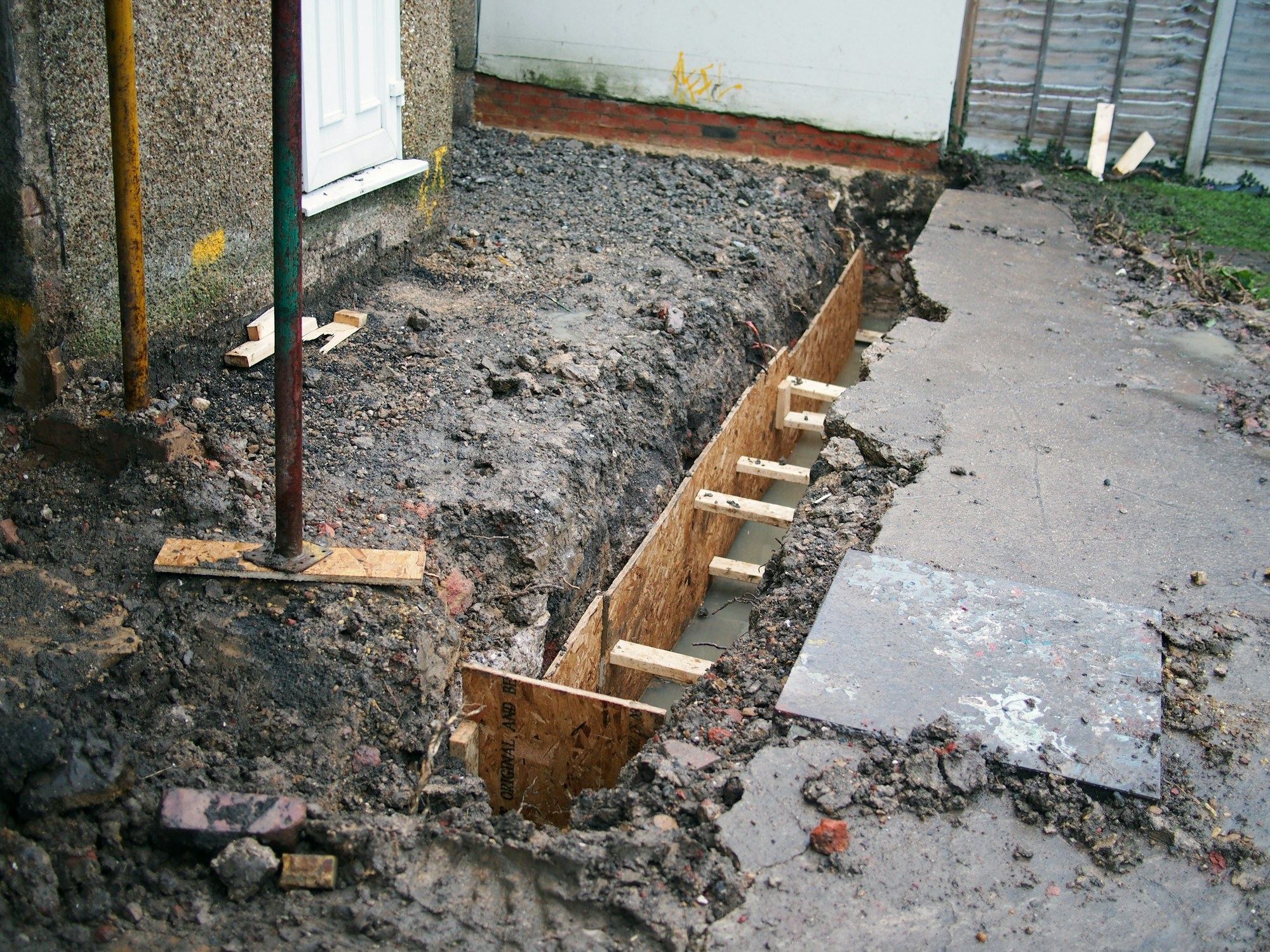
For minor movement, repairing the drain and filling the void with grout may be enough. Where the drop is larger, a specialist firm might specify [mass concrete underpinning](/underpinning/mass-concrete) to extend the footing down to solid ground. On sites with restricted access or deeper problems, [mini piled underpinning](/underpinning/mini-piled) reaches past the disturbed zone entirely. [Resin injection](/underpinning/resin-injection-preston) is another option where the soil can be compacted without full excavation. The decision rests on the survey findings, the type of ground, and how much the wall has moved.
Between the survey and finishing the repairs
Once the CCTV footage confirms the fault, the specialist firm plans the sequence. Usually the drain is repaired or replaced first, so no more water enters the ground during the structural work. Then any underpinning proceeds. After the foundation is stable, the cracks in the walls are addressed through [crack repair](/underpinning/crack-repair-preston), which involves stitching, repointing or replacing damaged bricks.
Homeowners often ask how long to wait before redecorating. Plaster and filler need the wall to stop moving first. A period of monitoring confirms stability. Rushing to paint over fresh plaster on a wall that is still settling wastes effort. The specialist firm advises on the timeline based on the repair method used and the readings from any gauges fixed to the masonry.
From first sign to finished repair
- 1
Note the symptoms
Record where the cracks are, whether drains smell, and if doors stick. This helps the specialist firm plan the visit.
- 2
Arrange a site visit
A specialist firm inspects the home, checks the drainage layout and decides whether a CCTV survey is needed next.
- 3
Survey the drains
A camera runs through the pipes to find fractures, blockages or collapsed sections without digging up the drive.
- 4
Agree the repair plan
The specialist firm explains whether fixing the drain alone is enough or if underpinning must follow to support the footing.
- 5
Complete the work
Drains are repaired first, then foundations are stabilised, and finally the wall cracks are stitched and filled.
What shapes the cost of drainage and foundation work
Every home sits on different ground, with pipes of different ages and depths, so the scope of work varies from one job to the next.
- Depth of the leaking pipe
- Deeper pipes require longer excavations or specialised equipment to reach and replace safely.
- Extent of soil loss
- A large void beneath the footing demands more fill material or a wider underpinning section to bridge.
- Access around the home
- Narrow yards or terraced layouts limit machinery size, changing the method and labour involved.
- Type of repair chosen
- Relining a pipe costs differently from full replacement, just as resin injection differs from mass concrete.
The specialist firm sets out the full cost for your specific home before any work begins.
Tell us what you have noticed at your home
Send a description of the cracks, any smells or damp, and where your home is in Preston. A specialist firm reviews it and replies with next steps. There is no obligation to proceed.
- No fee for the first review
- Local firms handle the work
- Your details stay private