Clay soil guide
Clay soil and cracked walls: why the ground shrinks
Send details of your home and the cracks you have noticed. A specialist firm will review them and tell you whether a subsidence survey is needed, at no cost to you.
Why clay soil cracked walls appear across Preston
Boulder clay sits beneath much of the city. When it dries out or gets wet, shallow footings move. Find out which homes feel it most and what the damage looks like over time.
The ground beneath east and north Preston
Much of the land east and north of the city centre sits on boulder clay, also called glacial till. This dense mix of fine particles, sand and stones was left behind by glaciers. For anyone living in areas like Fulwood, Ribbleton, Cadley or Grimsargh, understanding this soil type and foundations is the first step when cracks appear.
Boulder clay Preston houses stand on behaves differently from the sandier ground near the Ribble. Clay holds water like a sponge. During wet months it swells. In summer, especially after a long dry spell, it shrinks. That repeated shrinking and swelling is what causes shrink swell soil damage to masonry above.
If you want to find out whether your house sits on clay, start with the British Geological Survey map for your postcode. The map shows where glacial till meets other deposits. A specialist surveyor can confirm the exact conditions below your footings by digging trial holes or taking borehole samples.
How shrink and swell moves a wall through the year
Clay does not crack a wall in a single event. The movement happens slowly, following the seasons. After heavy autumn rain the ground absorbs water and expands, pushing shallow footings upward. By late summer, roots and heat draw moisture out, and the clay contracts. The footing drops.
Over a full year this cycle repeats. A hairline fracture opens during the dry months, then closes slightly when the rains return. But each cycle can leave the crack a fraction wider than before. Eventually the mortar gives way permanently. You might notice doors sticking and windows jamming as frames distort, or gaps appearing around skirting boards.
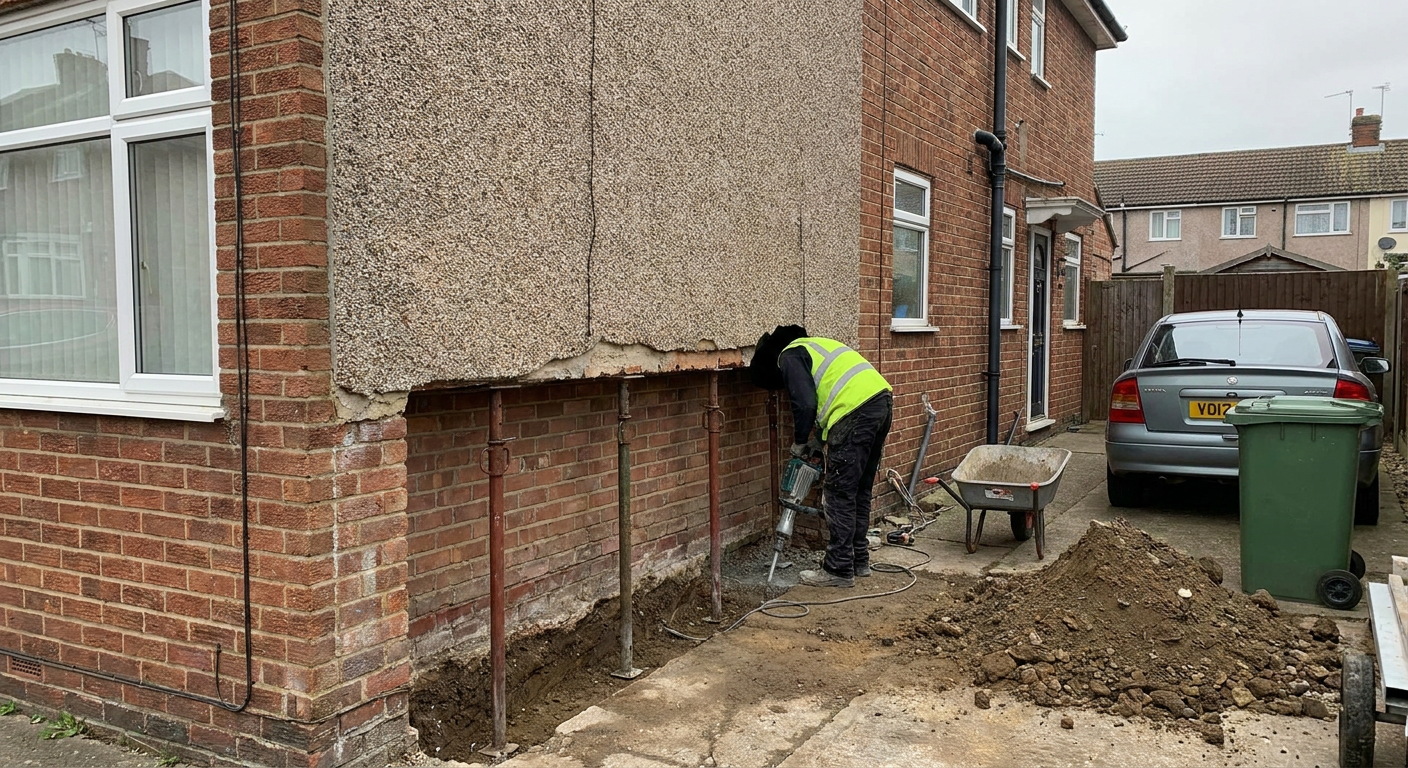
Homes built in the Victorian era often have shallow foundations, sometimes only two or three bricks deep. An old house with shallow foundations rests entirely within the active clay zone, so every seasonal change transfers directly into the brickwork. Newer builds typically have deeper trenches that reach more stable ground, reducing the effect. Read more about [measuring cracks at home](/cracks/measure-a-crack-at-home) to track whether yours are growing.
Extensions, trees and signs to watch for
An extension usually has shallower footings than the main house, because building standards were different when it was added, or because the builder did not dig as deep. So cracks in extension walls are common where the newer structure joins the older one. The junction acts as a hinge, and differential movement tears the mortar apart.
Trees and large shrubs extract enormous volumes of water from clay. A mature oak or poplar can pull thousands of litres from the soil in a single summer, accelerating shrinkage right next to the wall. Removing a tree suddenly can cause the opposite problem: the clay rehydrates and heaves upward. Specialist advice is needed before any felling.
Clay subsidence signs UK homeowners should know include stepped cracking along mortar lines, diagonal fractures wider at the top than the bottom, and wallpaper tearing at internal corners. If a survey has already flagged structural movement, the next step is usually a period of monitoring to establish whether the shifting is ongoing or historic.
When movement needs underpinning
Not every crack means the ground has failed. Seasonal movement that opens and closes within a few millimetres rarely requires foundation work. But if the clay continues to lose moisture, perhaps because of a persistent drain leak or a tree planted too close, the footing may drop far enough to compromise the wall.
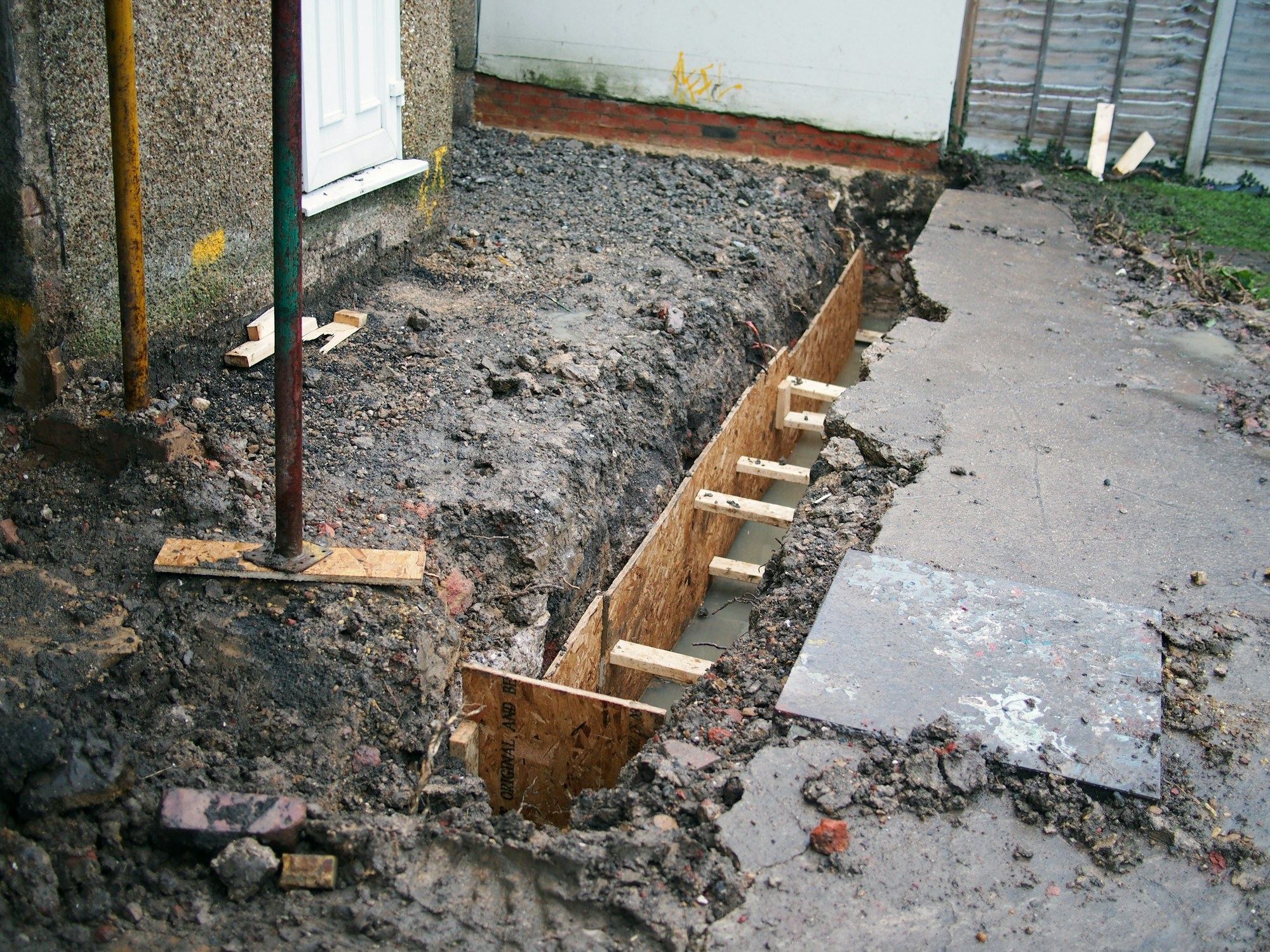
At that point a specialist firm will assess the options. Mass concrete underpinning replaces the failing soil with a solid block beneath the existing footing. Mini piled underpinning drives steel-cased piles past the clay layer into firmer strata below, bypassing the shrink-swell zone entirely. Resin injection suits some soils but performs best where the ground can be compacted; thick boulder clay often resists it.
A subsidence survey determines which method fits your home. The surveyor examines the cracks, checks drainage and maps the soil profile before any work begins. Crack repair follows once the ground is stable, restoring the brickwork and plaster.
What happens after you report the cracks
- 1
Describe the damage
You send photographs and a description of the cracks, the rooms affected and any recent dry weather.
- 2
Review by a specialist
A specialist firm reads the details and decides whether a site visit and subsidence survey are necessary.
- 3
Site investigation
The surveyor digs trial holes, measures crack widths and identifies the soil type beneath your footings.
- 4
Stabilisation plan
If movement is active, the specialist recommends mass concrete, mini piling or another suitable method.
- 5
Repair and monitoring
Once the ground is stable, crack repair restores the walls and monitors confirm the movement has stopped.
Questions about clay movement in Preston
These are the things homeowners ask when they suspect the ground beneath their house is drying out or swelling.
How do I find out whether my house in Preston sits on clay?
Check the British Geological Survey map for your postcode. Areas like Fulwood, Ribbleton and Cadley sit largely on boulder clay. A specialist surveyor confirms the exact depth by digging trial holes during a subsidence survey.
Why do shallow Victorian footings suffer more on clay?
Victorian builders dug footings only a few courses deep, placing them entirely inside the clay layer that swells and shrinks. Modern foundations go deeper, reaching stable ground below the active zone, so they move far less.
What does shrink and swell actually do to a wall over a year?
In winter the clay absorbs water and pushes the footing up. In summer it dries and the footing drops. Each cycle widens existing fractures slightly until the mortar fails and doors or windows begin to stick.
Are extensions more likely to crack than the original house?
Yes. Extensions often have shallower footings than the main building, so they respond faster to moisture changes in the clay. The joint between old and new brickwork is usually where cracks appear first.
Do trees and shrubs make clay movement worse?
Tree roots extract large volumes of water from clay, accelerating shrinkage near the wall. Removing a tree without specialist guidance can cause the clay to swell rapidly instead. Always seek advice before felling anything.
When does clay movement need underpinning?
Seasonal hairline cracks that open and close rarely need it. Underpinning becomes necessary when monitoring shows continuous downward movement, or when a footing has dropped far enough to distort door frames and split masonry.
Can resin injection stabilise clay ground?
Resin injection compacts loose granular soils well, but thick boulder clay resists expansion. A specialist firm will test the ground first. Where clay is the problem, mass concrete or mini piling is usually more reliable.
What should I do first if I think clay is behind my cracks?
Measure the widest crack with a ruler and photograph it. Note whether doors stick. Then send those details through the enquiry form so a specialist firm can decide if a site visit is warranted.
Tell us what you have noticed
Send a description of the cracks and where they are in your home. A specialist firm will review the details and advise whether a survey is needed. There is no charge for this initial look.
- No obligation to proceed
- Free initial review
- Local specialists only