Preston homes
Tree roots cracking walls: how close is too close?
Send the details of what you have noticed at your home. A specialist firm will review it and tell you whether the ground movement needs attention, with no cost or obligation to you.
How close can a tree be to a house before roots cause damage
Why tree roots cracking walls happens on Preston clay
Much of Preston sits on boulder clay and glacial till. These soils shrink when they dry out and swell when they get wet. Tree roots cracking walls is a common result because large trees draw significant moisture from the ground beneath foundations. When the clay dries, it contracts, and the footing loses support. The wall above settles unevenly, and cracks open.
The problem is not the root pushing the masonry apart. It is the soil losing volume. A mature oak or willow can extract thousands of litres of water each summer. On heavy clay around Fulwood, Penwortham or Ashton-on-Ribble, that extraction changes the ground level by millimetres. Over a season, those millimetres add up. Clay soil shrinkage cracks tend to appear in late summer after a dry spell, often tapering wider at the top. A subsidence survey establishes whether a nearby tree is the actual cause or if something else, like a leaking drain, is responsible.
Distance rules and how far trees should stand from walls
People often ask how close can trees be to house walls without risk. A rough guide used by structural engineers ties the safe distance to the mature height of the species. For a high-water-demand tree like a poplar or willow, the roots can influence clay at a distance equal to its full mature height. Moderate-demand species such as sycamore or ash typically affect soil within half to three-quarters of their mature height. Low-demand trees like birch or holly rarely reach beyond a quarter of their height.
These are starting points, not guarantees. Soil type matters as much as species. In areas near the Ribble where alluvial ground replaces boulder clay, the behaviour differs entirely. A subsidence survey in Preston determines the actual soil profile and measures existing movement. If you suspect a neighbour tree cracking my wall, the same investigation applies: the specialist assesses the ground, the structure and the vegetation together before recommending any action.
Which trees cause the most foundation trouble locally
Willows, poplars and oaks take the most water from the ground. They are the species most frequently linked to tree root damage foundations Preston homeowners report. Sycamores and ashes follow closely. All five thrive across Lancashire, and many older streets in Deepdale, Broadgate and Fishwick were planted with them decades ago when houses were built.
A twenty-metre oak standing ten metres from a gable end on shrinkable clay is a likely source of seasonal movement. But proximity alone does not confirm subsidence. The specialist firm looks for stepped cracking in brickwork, doors sticking in frames and windows jamming shut. Crack monitoring over several months shows whether movement correlates with the seasons. Only then can anyone say with certainty which tree is involved and what to do about it. Removing the wrong one wastes money and leaves the real problem untouched.
Why felling the tree is not always the right answer
If you are wondering should I remove tree near house, the answer depends on the soil and the history of movement. Felling a large tree on shrinkable clay can trigger heave. The ground, no longer drained by roots, absorbs water and swells upward. That swelling pushes foundations in the opposite direction, opening new cracks or widening old ones. Heave damage is often harder to repair than the original subsidence.
The specialist decides case by case. Sometimes crown reduction lowers water demand enough to stabilise the soil without removing the tree entirely. In other situations, root barrier foundations work offers a middle path. A physical barrier installed between the tree and the footing deflects roots downward, preserving the tree while protecting the clay. Foundation repair in Preston might combine this with crack repair once the ground has settled. The sequence matters: stabilise the soil first, then address the masonry.
What happens when the tree belongs to someone else
When the suspected tree stands on council land or a neighbour's garden, you cannot act unilaterally. If a neighbour tree cracking my wall is the concern, start by speaking to them directly. Many disputes resolve once both parties understand the ground conditions. If the tree is protected by a preservation order or stands in a conservation area, you need written consent from the local planning authority before pruning or felling it. Doing the work without permission is an offence.
A subsidence survey provides the evidence needed for these conversations. The report documents the movement, identifies the species and explains the mechanism. Insurers rely on this document. They do not usually insist on tree removal before considering repair; they require proof that the proposed solution addresses the cause. Whether that means pruning, installing a root barrier or underpinning the affected section of foundation depends entirely on what the investigation finds.
What changes the cost of tree-related repair work
Every home sits on different ground, and every tree draws water differently. The method the specialist chooses depends on what the survey finds, so the work varies from job to job.
- Species and water demand
- High-demand trees extract more moisture, requiring deeper or wider stabilisation work beneath the footing.
- Soil type and depth
- Shrinkable clay needs different treatment from sandy or alluvial ground found closer to the river.
- Extent of movement
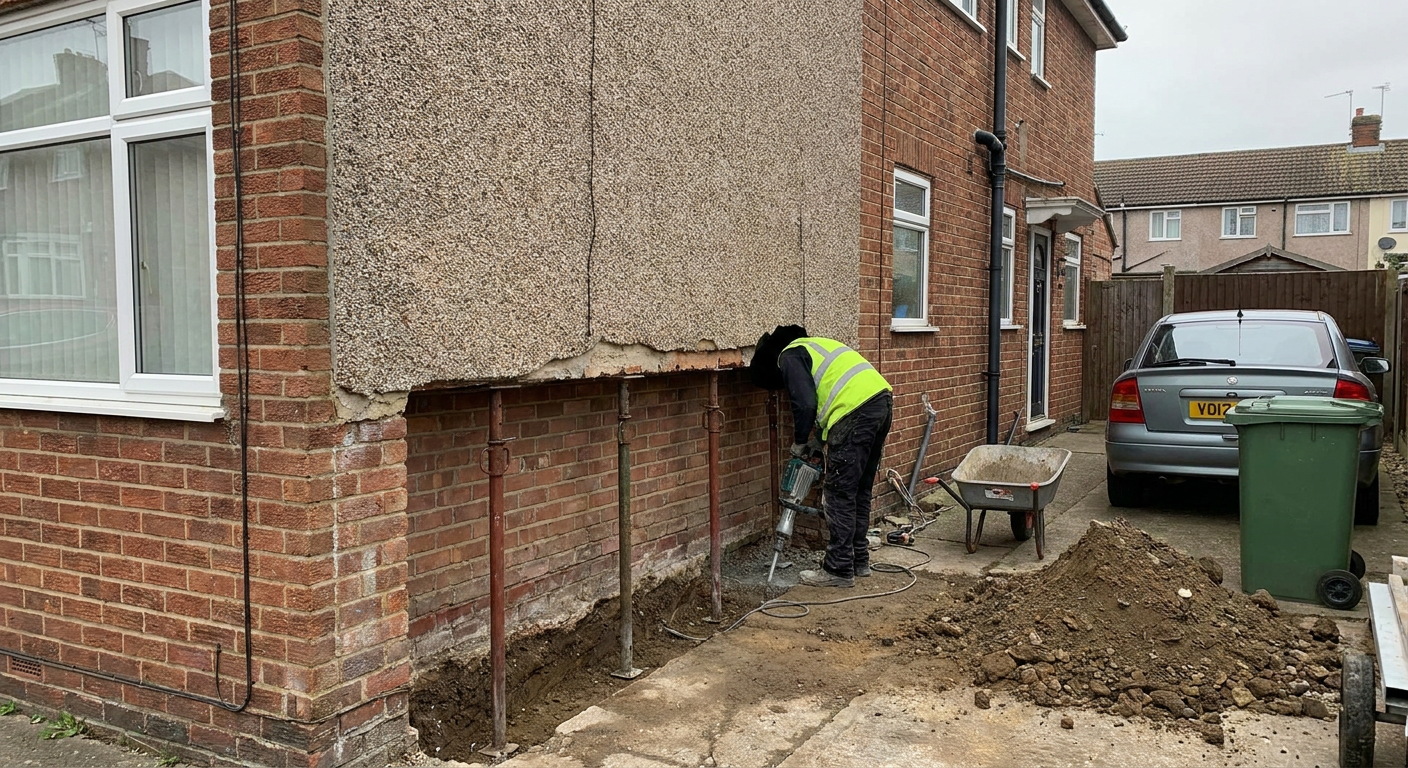
- Wider or longer-standing cracks may need mass concrete or mini piled underpinning rather than simple repair.
- Access around the home
- Restricted side returns or terraced layouts limit machinery size and change how the specialist works.
- Root barrier versus removal
- Installing a physical barrier involves trenching along the foundation line, which differs from stump grinding.
The specialist explains the full cost of the particular job before any work is agreed.
Questions about trees and subsidence
Is a mature sycamore six metres from my back wall in Fulwood too close?
Sycamores have moderate water demand. Six metres falls within the typical zone of influence on shrinkable clay. A subsidence survey in Fulwood will measure current movement and confirm whether this specific tree is affecting your foundations.
Which trees are the worst for foundations on Preston clay soils?
Willows, poplars and oaks extract the most moisture. Ashes and sycamores follow. On Preston's boulder clay, these species are the most frequent causes of seasonal ground shrinkage and the resulting wall movement.
If I fell the tree will the cracks stop or could heave make it worse?
Felling a large tree on clay can cause heave, where the rehydrated ground swells and pushes foundations upward. This often causes more damage than the original subsidence. The specialist assesses this risk before recommending removal.
The tree is on council land next to my garden, who do I speak to?
Contact Preston City Council's tree officer. You will need a subsidence survey report showing the tree is causing damage to your home before the council considers pruning or removal on their land.
Do I need permission to remove a tree with a preservation order?
Yes. Felling or pruning a protected tree without written consent from the local planning authority is an offence. Submit an application supported by structural evidence showing the tree is causing subsidence.
Will my insurer insist on tree removal before they consider repair?
No. Insurers require evidence that the proposed remedy addresses the cause. That might mean managed pruning, a root barrier or underpinning rather than complete removal. The survey report guides their decision.
How soon after pruning or removal would I expect cracks to stabilise?
Clay takes time to rehydrate. Movement typically continues for several months, sometimes over a year, after the water demand changes. Crack monitoring tracks this period until the ground reaches equilibrium.
Is root barrier work an alternative to taking the tree down?
Yes, in many cases. A root barrier deflects roots below foundation level, reducing moisture extraction from the clay while keeping the tree intact. The specialist determines whether the site layout allows installation.
Tell us what you have noticed at your home
Send a description of the cracks or movement you have seen. The information goes to a specialist firm who will advise you on the next step. Nothing you send commits you to any work or payment.
- No obligation to proceed
- Free initial assessment
- Local specialists only