Areas covered
Areas covered around Preston
Find out what the ground beneath your home means for its foundations. Tell us where you live and what you have noticed, and a specialist firm will respond with advice that costs nothing.
Central Preston neighbourhoods
Homes in central Preston sit on varied ground. Avenham has older terraced housing where shallow foundations react quickly to changes in soil moisture. If you have spotted new cracks along the mortar lines, read about cracked walls in Avenham to understand what might be causing them.
Fishwick shares similar building stock, with many houses built before modern foundation standards applied. The page on cracked walls in Fishwick sets out what to look for and when to act.
Broadgate and Deepdale sit slightly higher but still rest on clay deposits that shrink during dry weather. You can find specific subsidence help in Broadgate or read about the subsidence survey process in Deepdale if doors have started sticking or plaster has begun to split.
Ashton-on-Ribble contains some of the oldest housing in the city. Many of these homes were built directly onto boulder clay. The guide to subsidence in Ashton-on-Ribble covers what happens when that clay dries out and moves beneath the footings.
Suburbs north and east of the city centre
Fulwood and Cadley developed later than the inner suburbs, but they still sit above glacial till. Houses here often show movement after long dry spells because the clay layer responds slowly to rainfall patterns. Read about the subsidence survey in Fulwood or find out what to do next in Cadley if a crack has widened over the summer.
Ribbleton has a mix of post-war semis and newer builds. Some streets were laid over filled ground, which compresses unevenly over decades. The page on cracked walls in Ribbleton explains how to tell fill settlement apart from seasonal clay movement.
Grimsargh sits further out, where the geology shifts towards sandstone and thinner clay layers. Movement here tends to follow drainage problems rather than drought. The subsidence survey guide for Grimsargh covers what a specialist looks for when inspecting foundations in this area.
South of the Ribble and surrounding towns
Penwortham rises steeply from the river. Homes at the bottom of the slope sit closer to the water table, while those near the top behave more like properties on open moorland clay. The Penwortham subsidence page walks through the signs to watch for at each level.
Bamber Bridge and Leyland fall outside the city boundary but share the same underlying geology. Both areas have seen significant house building over former industrial land. Find out about cracks and clay in Bamber Bridge, or read the Leyland subsidence guide if your home is showing stepped cracking along the brickwork.
Clayton-le-Woods sits between the two, largely residential, with mature trees that draw moisture from the soil during summer. The Clayton-le-Woods page explains what to expect when roots interact with shallow foundations.
Farington rounds out the southern area. Its proximity to old mill sites means made ground is common. The Farington subsidence page details how specialists approach foundations built on imported fill.
What happens after an enquiry
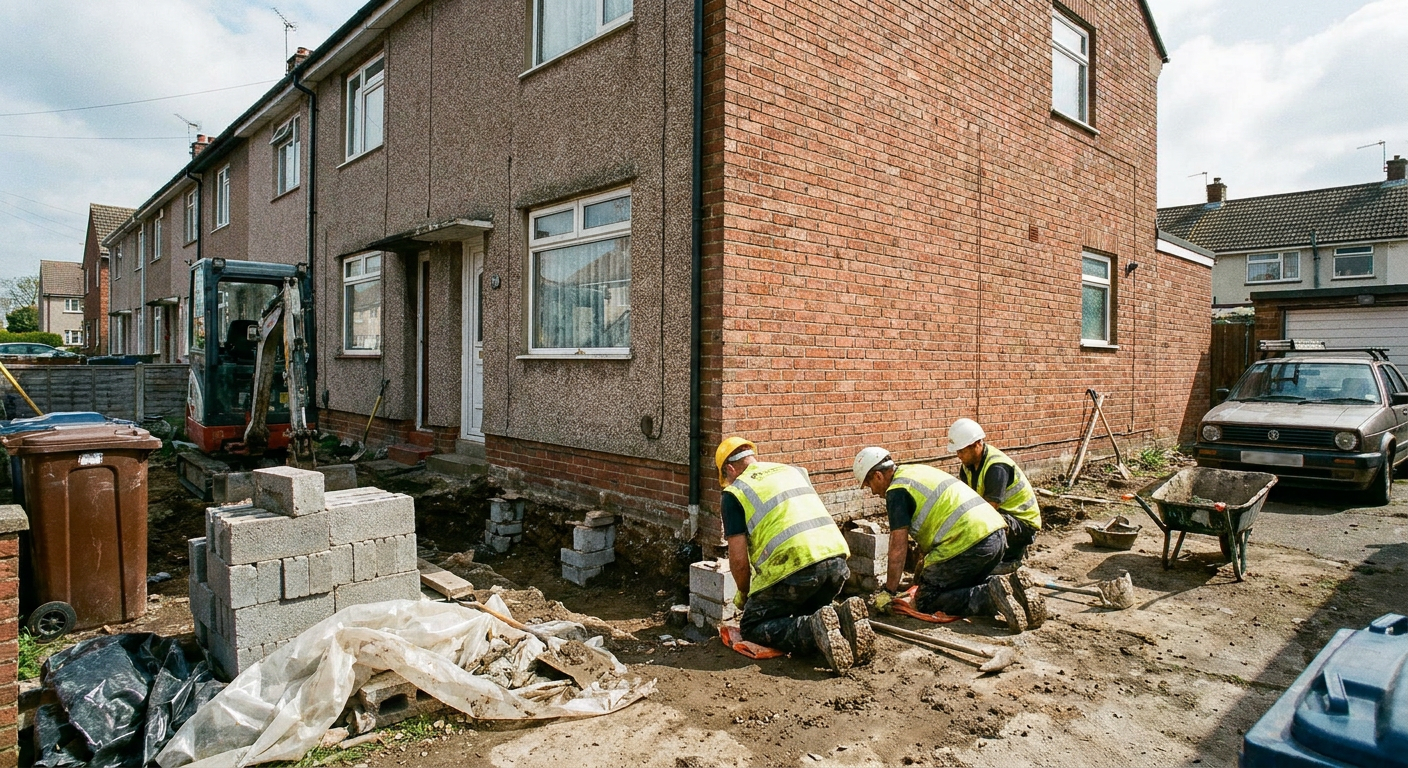
Once you describe the problem and where your home is located, a specialist underpinning firm takes over. They decide whether the ground conditions call for mass concrete underpinning, mini piled foundations or resin injection to stabilise the soil.
If the movement is slight or seasonal, they may recommend structural monitoring before any physical work begins. This involves fixing gauges across a crack and measuring changes over several months so everyone knows whether the wall is still shifting.
When repair is needed, the specialist handles everything from digging trial holes to pouring new concrete or driving piles. They also arrange building control approval, since underpinning is notifiable work under current regulations.
You stay in contact with one point throughout. The firm doing the work manages the site, the paperwork and the reinstatement once the foundations are stable again.
Tell us where your home is and what you see
Send a short description of the crack or movement you have noticed. A specialist firm will review it and reply with plain advice. There is no charge and no obligation to proceed.
- No cost to ask
- Local specialists only
- No obligation
Preston
- Bamber Bridge
A subsidence survey in Bamber Bridge pins down why walls are cracking, from clay shrinkage to leaking drains, and what repair work may follow.
- Leyland
A subsidence survey in Leyland looks at cracking, sloping floors and sticking doors to work out what is moving and which repairs may be needed.
- Penwortham
A subsidence survey in Penwortham checks cracks, doors and floors, explains likely causes such as clay shrinkage, trees or leaking drains.
- Clayton-le-Woods
A subsidence survey in Clayton-le-Woods explains why walls crack and floors drop, which checks are made on site and how findings guide any underpinning.
- Avenham
Cracked walls in Avenham, Preston can mean settlement, old mortar or failed lintels. See which cracks matter, what checks help and the repair routes open.
- Broadgate
Subsidence help for Broadgate homes near the Ribble, covering the cracks and sticking doors to look for and what a survey of your foundations involves.
- Deepdale
A subsidence survey in Deepdale looks at cracks, foundation depth and nearby trees, so you know whether movement is live and what repair may be needed.
- Fishwick
Cracked walls in Fishwick can come from clay shrinkage, leaking drains or ordinary settlement. Find out which cracks matter and how they are assessed.
- Farington
Subsidence help in Farington for houses with stepped cracks or sloping floors, explaining the early checks, crack monitoring and underpinning options.
- Ashton-on-Ribble
A subsidence survey in Ashton-on-Ribble looks at cracks, foundations and ground conditions, so you know what is moving and what repair work may follow.
- Cadley
Subsidence help in Cadley, Preston covers the signs to check, how a survey works and the underpinning options for homes showing movement.
- Grimsargh
A subsidence survey in Grimsargh checks cracks, sticking doors and windows and ground conditions, and explains which repairs may be needed.
- Ribbleton
Cracked walls in Ribbleton can come from settlement, clay shrinkage or old lintels. Find out which cracks matter and what a survey can confirm.
- Fulwood
A subsidence survey in Fulwood looks at cracked walls, sloping floors and sticking doors to work out whether foundation movement is the cause.