Walton-le-Dale, Lostock Hall
Subsidence help in Walton-le-Dale and Lostock Hall
Describe the crack or movement you have noticed at home. A specialist firm will review the details and advise whether a survey is needed, with no cost or obligation to you.
Reading the ground beneath your home
Find out what causes walls to move in Walton-le-Dale and Lostock Hall, how a specialist firm checks the ground, and what stabilises a sinking foundation.
Ground conditions near the Ribble
Walton-le-Dale and Lostock Hall sit close to the River Ribble, where the ground changes over short distances. Some streets rest on river silt and soft alluvial deposits, while others sit on firmer clay left behind by glaciers. The type of soil beneath a house determines how it reacts when the weather turns dry or wet.
Clay shrinks during long dry spells and swells again when rain returns. Silt compresses slowly under the weight of a building. Both movements show up as cracks in brickwork, plaster that splits away from walls, or doors that jam in their frames. If you live near the river, understanding the soft alluvial ground matters before any repair work begins.
A subsidence survey establishes which soil type supports the foundations and whether it has moved. The specialist firm digs trial holes, takes samples and measures existing cracks so they can recommend the right approach for your home.
What the cracks tell you
Cracks do not all mean the same thing. A thin line running through plaster above a window frame often comes from normal settling or temperature changes. Stepped cracks that follow the mortar joints between bricks suggest something deeper is moving beneath the wall.
The width of a crack matters as much as its shape. Measuring it with a simple gauge at home gives you a starting point, but a structural engineer needs to see whether the gap is still widening. That is why monitoring equipment is fixed across the crack over several months. The readings show if the wall is stable or still shifting.
Doors that stick and windows that refuse to close are early warnings. They happen because the frame distorts as the wall moves. If these problems appeared after a particularly dry summer, shrinking clay is a likely cause. A specialist firm reads these signs together rather than treating each one in isolation.
Drains, trees and hidden causes
Before anyone talks about underpinning, the drains need checking. A leaking pipe washes fine soil away from the foundation, leaving a void that the wall drops into. This kind of subsidence can sometimes be stopped by repairing the drain alone, without touching the concrete footing.
Trees cause similar problems, though more slowly. Roots extract moisture from clay, making it shrink. A large oak or poplar standing close to a house can pull enough water from the ground to tilt a foundation. Removing the tree suddenly creates another risk, because the clay reabsorbs water and heaves upward. An arboriculturist usually advises on managing the roots instead.
A thorough investigation looks at drainage runs, tree positions and the history of the street. Older houses in Lostock Hall may have shallow footings that were adequate when built but struggle now because of changed ground conditions or nearby construction.
Choosing the right repair method
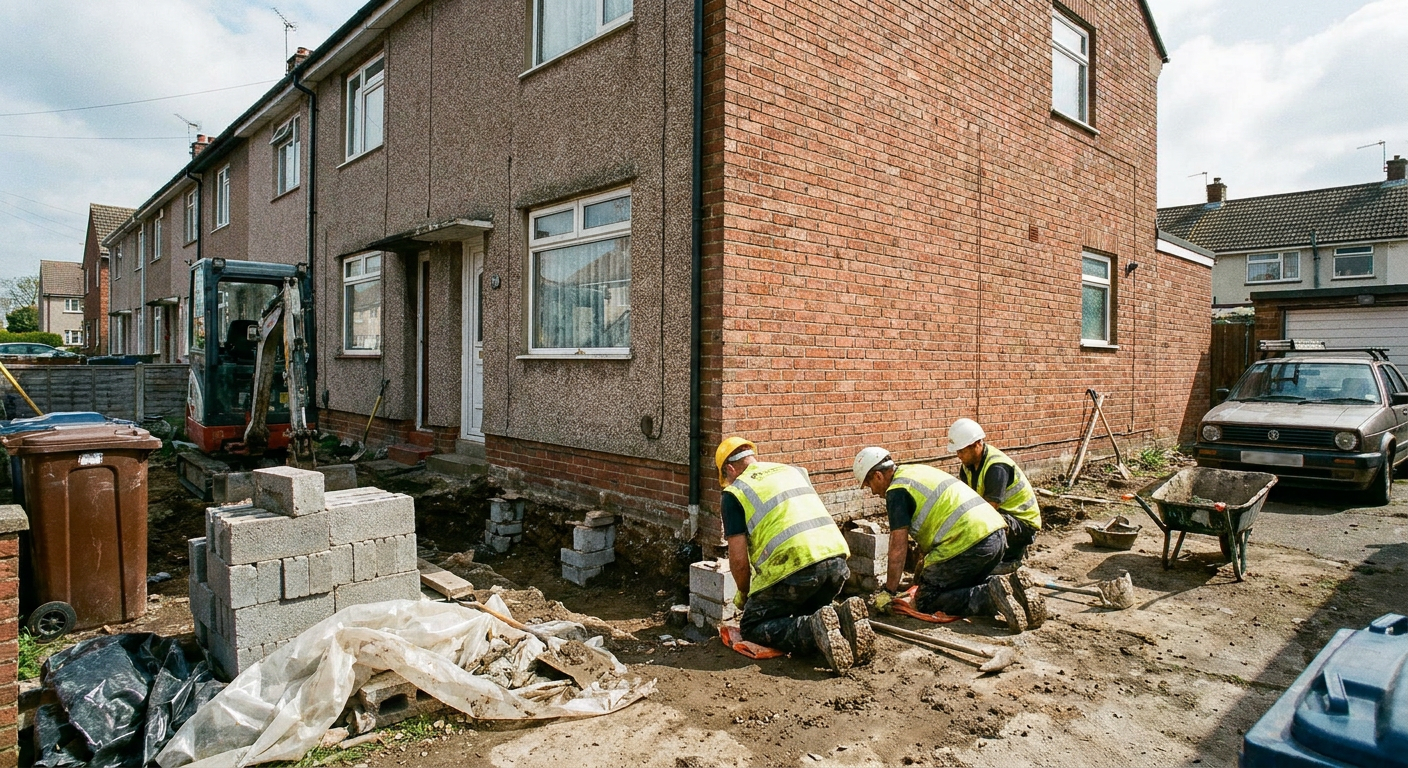
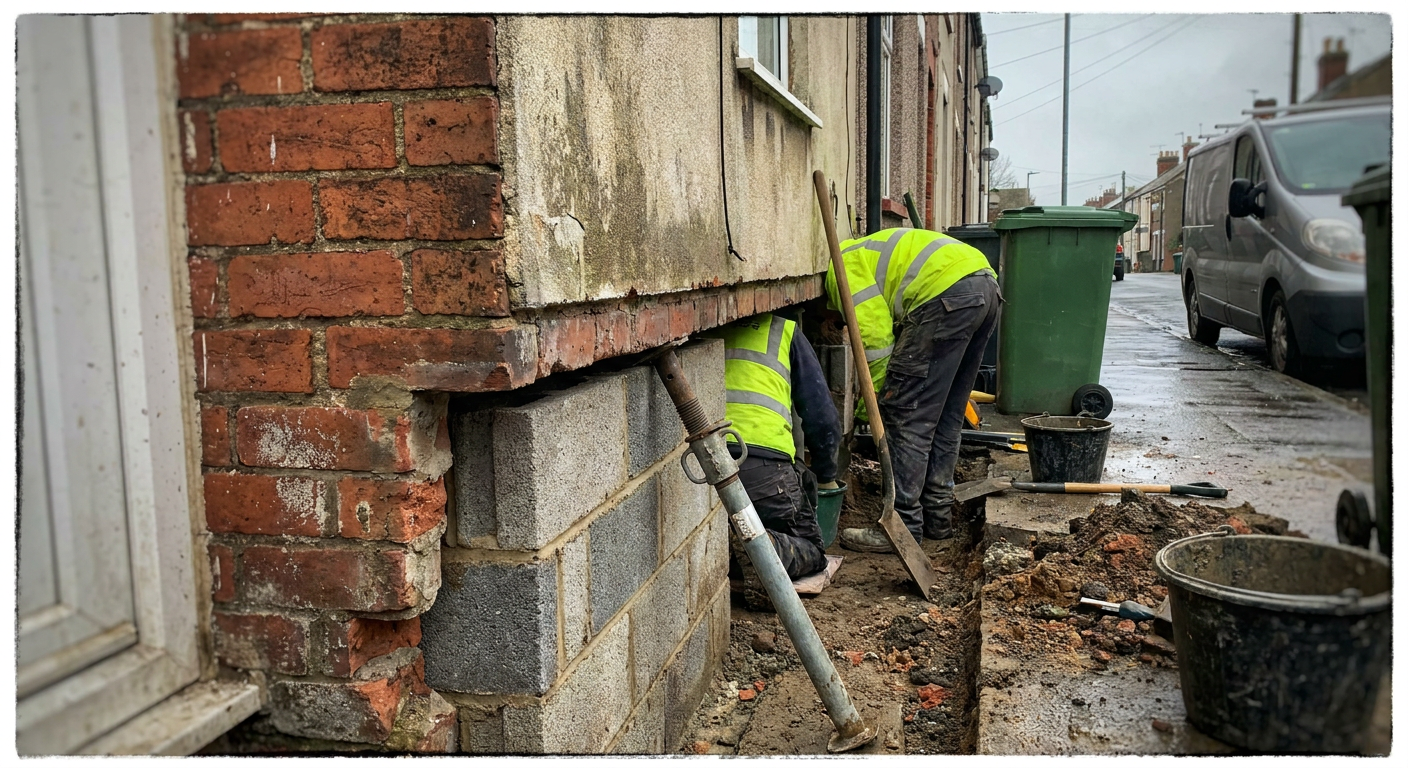
Once the cause is known, the specialist firm selects a way to stop the movement. Mass concrete underpinning involves digging sections beneath the existing foundation and filling them with fresh concrete. It suits homes where the bearing layer is reachable by hand digging.
Where the stable ground lies deeper, mini piled underpinning drives steel piles down to a firm stratum. The load transfers through the weak upper layers entirely. This method works well on sites near the Ribble where soft silt extends several metres down.
Resin injection offers a lighter alternative for some situations. Expanding resin is pumped into the ground beneath the footing, compacting loose soil and lifting the slab back toward its original level. The specialist firm decides which technique fits the soil, the building and the scale of the damage. Each method requires building control approval before work starts.
After the ground is stabilised
Underpinning stops further movement, but the visible damage remains. Cracked brickwork needs repointing or rebuilding, and internal plaster requires patching once the structure has settled into its new position. A specialist firm handles crack repair separately from the foundation work, allowing time for the ground to adjust.
Keep every document the contractor provides. Survey reports, engineering drawings, building control certificates and guarantees all form part of the permanent record for your home. Mortgage lenders and future buyers will ask for them, so store the paperwork safely.
If you have noticed movement in Walton-le-Dale or Lostock Hall, start by describing what you see. A specialist firm reviews the details and advises whether a site visit is necessary. There is no charge for that initial conversation, and it clarifies whether the crack is cosmetic or something that needs attention.
Tell us what you have noticed at home
Send a description of the crack or sticking door. A specialist firm reviews it and advises on next steps. There is no fee and no commitment to proceed with any work.
- No obligation
- Free initial advice
- Local specialists