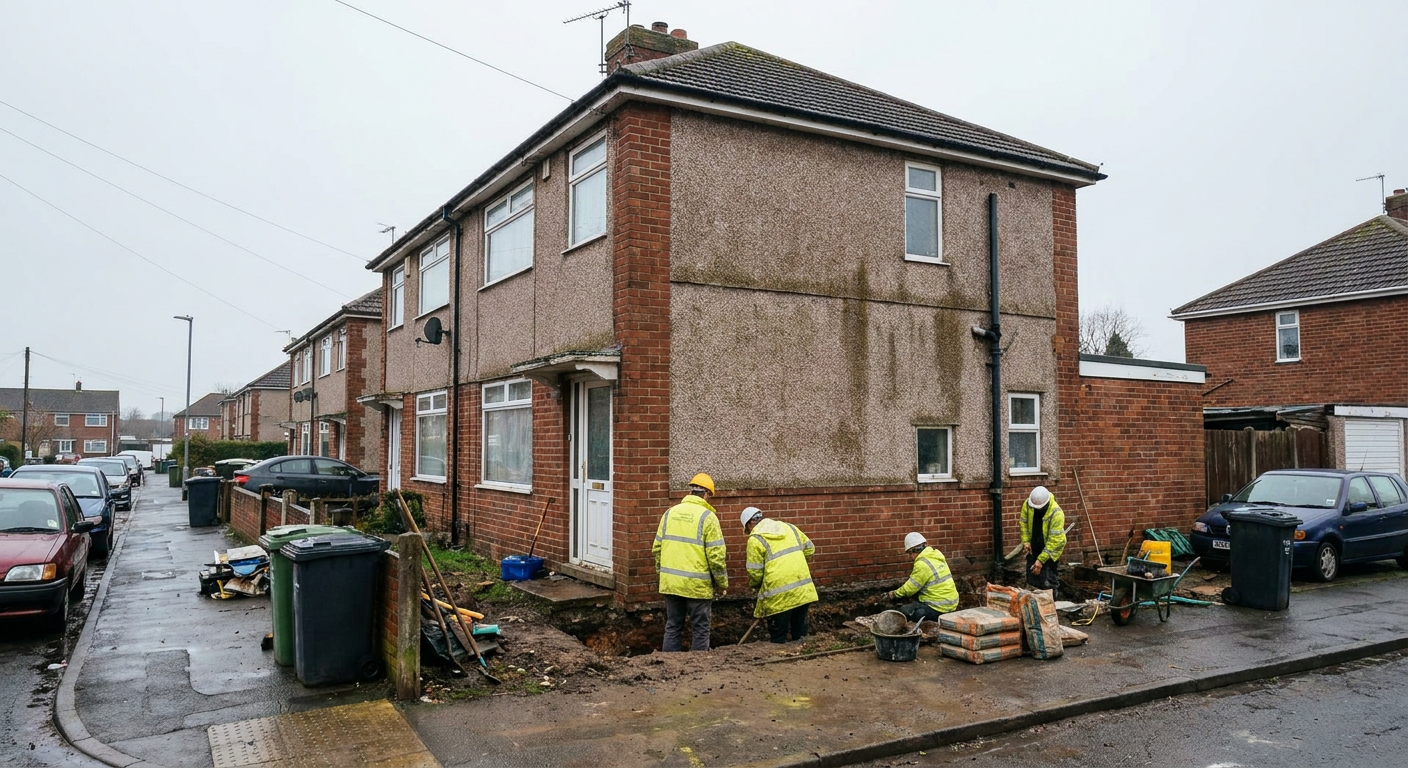
Made ground in Preston
Old mill sites and made ground under Preston homes
Send details about your home and find out whether a subsidence survey is needed. There is no fee for this first step, and it does not commit you to any repair work.
Made ground and buried mill foundations beneath Preston streets
Houses built over former mills often sit on filled ground that compresses unevenly. Learn why cracks appear and what a specialist firm can do about them.
Why old mill sites leave unstable ground
Preston grew around cotton mills, foundries and dye works throughout the nineteenth century. When those industries closed, the buildings came down and the land was levelled with whatever material was cheap and available. Brick rubble, ash clinker, broken stone and industrial waste were tipped into cellars, basements and hollows to create a flat surface for new streets.
This fill is known as made ground. Unlike natural soil or boulder clay, which settled over thousands of years, made ground was placed quickly and without compaction. A house built on top of it rests on a patchwork of materials with different densities. Some areas hold firm while others continue to compress under the weight of the building above.
Neighbourhoods close to the Ribble, such as Avenham and Fishwick, contain many streets where Victorian terraces stand directly over these old industrial plots. If your home is in one of these areas and you have noticed movement, understanding the ground beneath it is the first step toward fixing the problem.
How made ground causes cracks in walls and floors
Uneven settlement happens when one part of a foundation sinks faster than another. On made ground, this is common because the buried fill varies from one side of a house to the other. A wall supported by compacted brick will stay still while a wall resting on loose ash drops by several millimetres.
That differential movement pulls the structure apart. Cracks open along mortar joints, usually in a stepped pattern through the brickwork. Internal plaster splits, skirting boards pull away from the floor, and doors begin to stick in their frames. Floors may slope visibly toward one corner of a room.
These signs look alarming, but they follow a predictable mechanical cause. The house is reacting to the ground beneath it shifting. Measuring the width of a crack at home gives you a starting point to understand how much movement has occurred, and whether the shift is still active or happened long ago.
Telling made ground movement from clay shrinkage
Not every crack in a Preston home points to made ground. The region also sits on deposits of boulder clay, which shrinks during dry summers and swells when rain returns. That seasonal cycle produces its own pattern of cracking, typically opening in late summer and closing slightly over winter.
Movement caused by made ground behaves differently. It tends to progress slowly and steadily rather than following the weather. A leaking drain can accelerate it by washing fine particles out of the fill, creating voids that allow foundations to drop further. Tree roots near shallow footings draw moisture from the soil and add another variable.
A subsidence survey separates these causes. The specialist firm digs trial holes to inspect the soil profile, measures existing cracks, and checks drainage runs for leaks. That investigation determines whether the problem is seasonal clay movement, water loss, or ongoing compression of historical fill.
Underpinning methods used on made ground
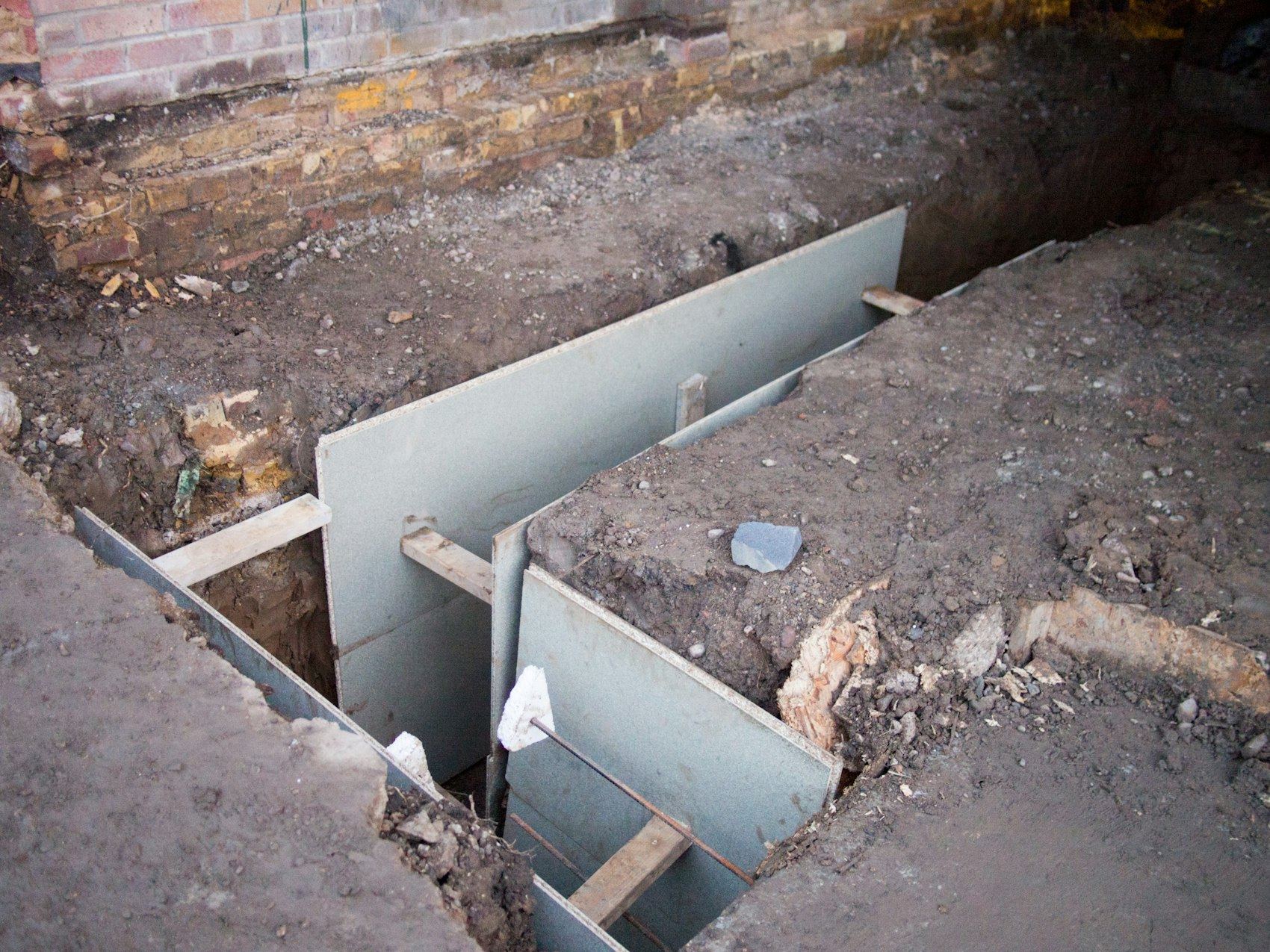
Once the cause is confirmed, a specialist firm designs a repair suited to the depth and condition of the fill. Mass concrete underpinning is often chosen where the unstable layer is relatively shallow. Workers excavate sections beneath the existing footing in sequence and pour concrete to transfer the load to firmer strata below.
Where made ground extends deeper, or where access is tight between terraced houses, mini piled underpinning may be necessary. Steel-cased piles are driven or bored through the fill until they reach a competent bearing layer, sometimes several metres down. A reinforced concrete beam then ties the piles together and supports the wall above.
Resin injection offers a third option for lighter settlement. Specialist contractors inject expanding geopolymer resin beneath the slab or footing to fill voids and lift the structure back toward its original level. The right method depends entirely on what the ground investigation reveals about the site.
Monitoring movement before and after repair
Rushing into underpinning without evidence risks treating the wrong problem. Specialist firms install crack monitors across fractures to record whether movement is continuing, slowing, or seasonal. These small gauges are checked over weeks or months to build a picture of how the building behaves.
If the readings show the house has stopped moving, cosmetic crack repair might be all that is required. Mortar joints are raked out and repointed, lintels are replaced where they have fractured, and internal plaster is made good. Structural monitoring confirms that the repairs hold over time.
For homeowners buying or selling a house on a former mill site, this recorded data matters. Mortgage lenders and insurers ask questions about subsidence history. Having a clear file showing the investigation, the monitoring period, and any remedial work completed makes those conversations straightforward.
Ask about your home on made ground
Leave a description of the cracks or sticking doors you have noticed. A specialist firm reviews the details and advises whether a site visit is warranted, with no obligation to proceed.
- No fee for advice
- No obligation to proceed
- Local specialists only