Near the Ribble
Homes near the Ribble: soft alluvial ground and silt
Find out what the crack in your wall means and whether the ground beneath your home is settling. Send a description of what you have noticed so far. There is no charge for that first conversation.
Soft alluvial ground and silt near the River Ribble
The soil close to the river behaves differently from the clay found higher up in Preston. Uneven settlement leaves marks on walls, and knowing the cause matters before anyone starts work.
What alluvial ground does to a foundation
Rivers leave behind layers of sand, silt and gravel over thousands of years. Near the Ribble, homes in areas like Penwortham, Avenham and Ashton-on-Ribble often sit on this material rather than the firmer boulder clay found further north.
Alluvial deposits compress when weight sits on them. A house built decades ago may have settled into the ground long ago, but changes around it can start the process again. A new extension adds load. A broken drain washes fine particles away. Either event leaves part of the foundation without support.
When one section of a footing sinks faster than another, the brickwork above bends. Tension opens gaps in the mortar joints. You might notice a door sticking or a window that will not latch. These are early signs that the ground has moved beneath the floor. A subsidence survey determines whether the movement is ongoing or happened once and stopped.
Recognising movement caused by silt and sand
Cracks from alluvial settlement tend to follow the weakest path through the masonry. On a brick house, that usually means stepped cracking along the mortar lines. The gap is often wider at the top than the bottom if the corner of the house is dropping away from the rest of the structure.
Silt is particularly sensitive to water. If a drain leaks nearby, the flowing water carries fine grains with it, creating a void under the concrete strip footing. The wall above drops into that space. Tree roots can have a similar effect, though they more commonly shrink clay soils than wash out silt.
Measuring the width of a crack gives a rough idea of severity, but width alone does not tell you whether the movement is finished. Specialist firms use crack monitoring over several months to track whether a gap is still opening. That data decides whether repair work is needed immediately or whether the wall has stabilised on its own.
Repair options for homes on soft river deposits
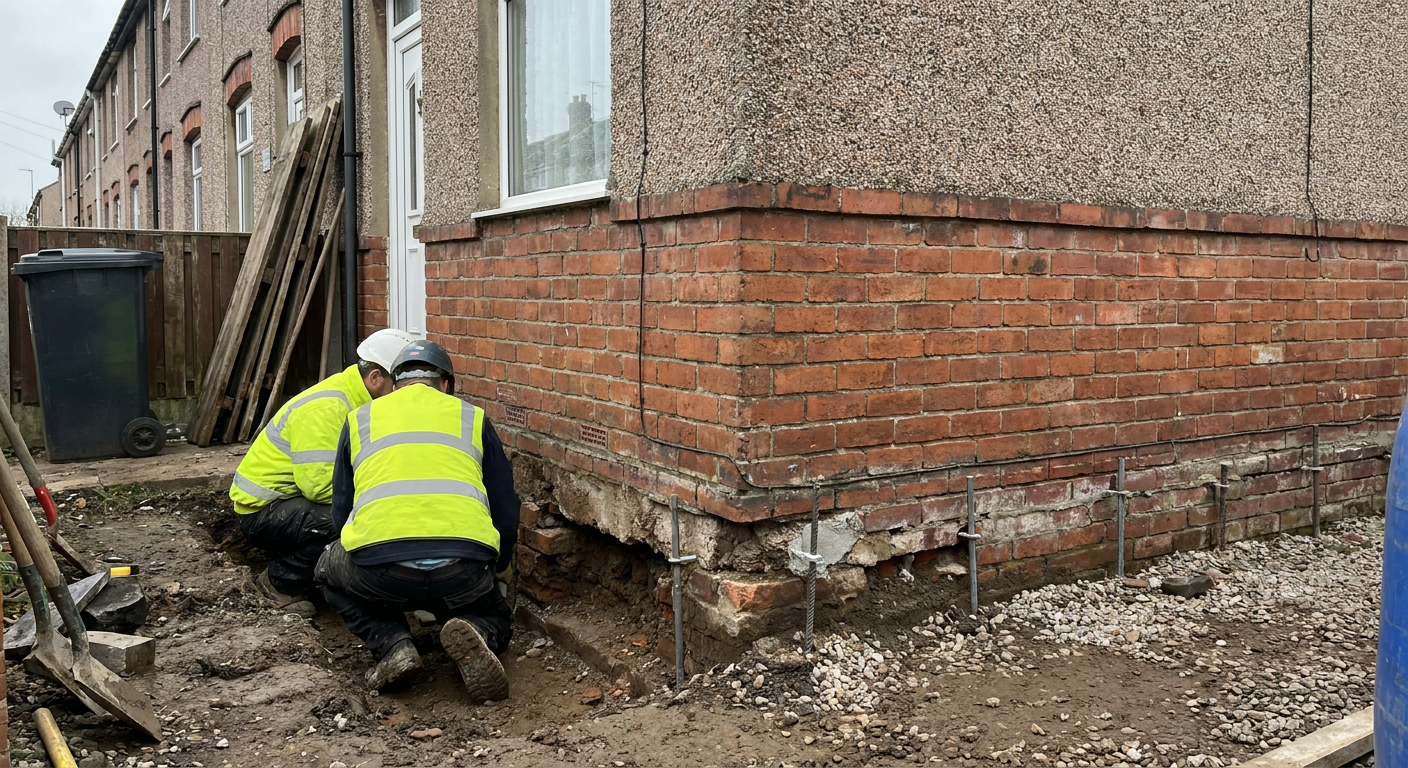
Once the cause is known, the right repair method depends on how deep the soft layer runs and how much load the wall carries. Mass concrete underpinning works where firm ground lies within reach of a shallow excavation. Workers dig sections beneath the existing footing and fill them with concrete to transfer the weight down.
Where the alluvium is thick, mini piled underpinning may be necessary. Steel-cased piles are driven or bored through the soft silt until they reach a bearing stratum that will not compress further. A reinforced concrete beam then ties the piles to the existing wall.
Resin injection offers a third route. Specialist contractors pump expanding resin into the ground beneath the footing. The resin fills voids and compacts loose material without the need for large excavations. This suits terraced houses where access is tight and neighbours share a party wall.
After the ground is stabilised, crack repair addresses the visible damage. Mortar joints are raked out and repointed, or helical bars are stitched across wider fractures to restore strength. The goal is a wall that behaves as a single unit again.
Living near the Ribble: what to watch for
If your home stands on the floodplain or the lower terraces of the Ribble, keep an eye on the base of exterior walls after heavy rain. Puddles that do not drain suggest the ground is saturated, which increases the risk of silt washing out from under footings.
Check internal walls where they meet the ceiling. Gaps that appear and close with the seasons point to slight ongoing movement. Doors that scrape the carpet only in winter mean the frame has shifted out of square.
None of these signs guarantee a serious problem. Older houses settle, and hairline cracks in plaster are common. But if a gap is wide enough to fit a coin, or if it runs diagonally across a structural wall, it warrants attention. Specialist firms in Preston deal with these conditions regularly. They read the soil, measure the movement and specify the repair that fits the ground beneath your home.
Tell us what you have noticed in your home
Send a short description of the cracks or sticking doors you have seen. A specialist firm will review it and advise on next steps. This enquiry does not commit you to any work.
- No obligation to proceed
- Free initial advice
- Local specialists respond