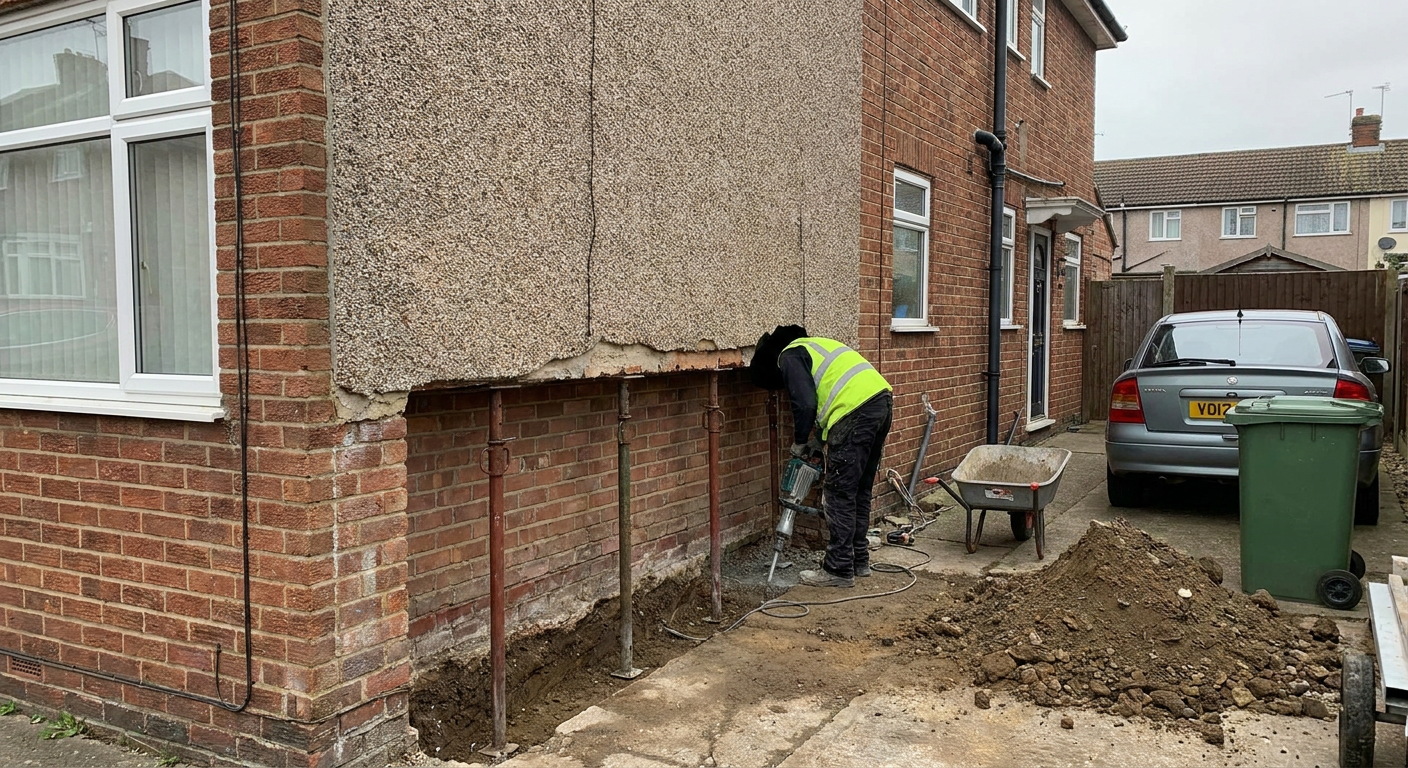
Ingol and Tanterton
Cracked walls in Ingol and Tanterton: what to check
Send the details of the cracks you have noticed. A specialist firm will read them and tell you if the movement needs attention, with no charge for that first look.
Cracked walls in Ingol and Tanterton: what to check in Preston
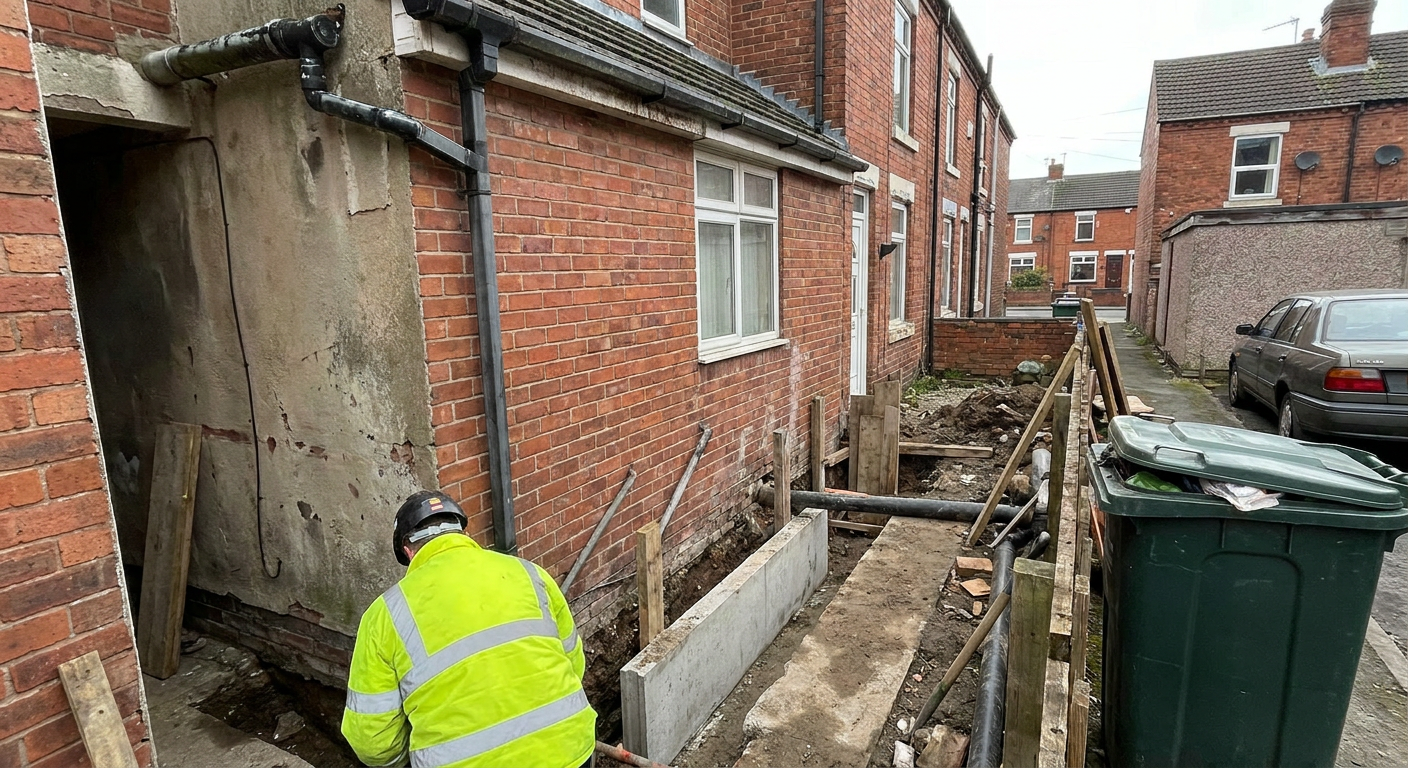
Why walls crack in these two estates
Ingol and Tanterton sit on ground that changes behaviour with the seasons. Much of the soil beneath these post-war estates contains clay. When rain is steady the clay holds moisture and stays still. After weeks without rain it dries out and shrinks, pulling away from shallow foundations.
Houses here were built quickly in the decades after the war. Many sit on strip foundations that reach only a metre or so into the ground. That depth leaves them exposed when the soil below moves. You might notice a fine line opening above a window frame, or a gap appearing where a skirting board meets the floor.
The first thing to do is find out whether the crack is new or has been there since the house settled years ago. Fresh plaster dust on the floor below a crack means something moved recently. A crack filled with old paint tells you it has been stable for a while. Recording which is which matters before anyone starts work. A subsidence survey will confirm what the ground is doing.
Clay shrinkage after a dry summer
A long dry spell draws water out of the soil evenly at first, then unevenly as tree roots take their share. The clay under one corner of your home may shrink faster than the rest. That difference in movement is what cracks brickwork.
In Ingol and Tanterton the problem often shows up between August and October. You might see diagonal lines running through mortar joints, wider at the top than the bottom. These stepped cracks follow the path of least resistance through the wall. They are common in homes built on boulder clay across Preston.
Measure the widest point with a ruler and write down the date. Do the same again a month later. If the number grows, the ground is still moving. A specialist firm uses this record to decide whether monitoring is needed or whether repair work can start straight away. Leaving a crack unmeasured makes it harder to judge the speed of movement later on.
Drains leaking under the garden
Older drainage pipes crack. Tree roots push into the joints, or the ground settling around them breaks a seal. When a drain leaks, water washes fine particles out of the soil beneath the foundation. The ground loses its ability to carry weight and the wall above it drops.
Signs are easy to miss. A patch of grass that stays greener than the rest in summer can mean water is pooling below it. A faint smell near an inspection chamber suggests a broken seal. Inside, doors that used to close freely begin to stick because the frame has twisted.
If you suspect a leak, a drain survey comes before any talk of underpinning. Fixing the pipe stops the soil washing away. Sometimes that alone halts the movement. A specialist firm will want to see proof that the drains are sound before they plan foundation repairs. Ignoring a leak means the ground keeps softening even after other work is done.
Trees close to the house
A mature tree extracts thousands of litres of water from the soil each year. Its roots spread far beyond the canopy. In Tanterton, where gardens back onto each other, a neighbour's tree can affect your foundations just as much as your own.
Willows, poplars and oaks are the thirstiest species. If one stands within ten metres of your home, the clay beneath your walls dries out faster than the clay further away. The result is differential settlement. One part of the house sinks while another stays put.
Cutting a tree down without advice can cause a different problem. The clay, no longer dried by roots, absorbs water and swells. This heave pushes foundations upward. Before removing anything, ask a specialist firm to assess the root spread and the soil type. They use this information to decide whether pruning, removal or root barriers make sense.
What to write down before calling anyone
Stand outside and look at the whole wall, not just the crack. Note where the line starts and ends. Is it near a corner, under a window, or beside a downpipe? Take a photograph with a coin or tape measure held against the widest point so the scale is clear.
Inside, check whether doors and windows still open smoothly. A sticking door often means the frame has shifted. Look at the ceiling where it meets the wall for fresh gaps. Write the date you first noticed each sign.
This record gives a specialist firm something concrete to work from. Without it, the first visit involves establishing facts you already know. With it, the conversation moves straight to what the movement means and whether underpinning, resin injection or simple crack repair is the right response. You can send these notes when you request a quote.
Tell us what you have found
Send your notes and photographs. A specialist firm will review them and advise whether the movement needs urgent attention, with no obligation to proceed.
- No fee for the first look
- Your details stay private
- No pressure to go ahead