Preston geology
Boulder clay and glacial till beneath Preston homes
Find out what the ground under your home means for the cracks you have noticed. Describe what you see and a specialist firm will advise you, with no charge or obligation to proceed.
How glacial deposits under Preston affect your foundations
The ground beneath Preston varies from soft river silt to dense boulder clay. Each type moves differently, so the cracks in your walls tell a story about the soil they sit on.
What boulder clay actually is
Boulder clay, also called glacial till, was left behind when the ice sheets retreated thousands of years ago. It is a dense mixture of fine clay, sand, gravel and larger stones packed tightly together. Unlike the soft shrinkable clay found further south in Lancashire, boulder clay does not swell dramatically when wet or shrink into deep fissures during a dry summer.
This matters if you are trying to understand why a crack has appeared in your living room wall. Homes built on pure shrinkable clay often develop cracks that open and close with the seasons. You can read more about that seasonal pattern in our guide to cracked walls after a dry spell. Boulder clay behaves differently because its mixed composition gives it more internal stability. Movement still happens, but the cause is usually something else entirely.
Across Preston, the depth of this glacial deposit changes. In some streets it sits just below the topsoil. In others, a layer of softer material rests above it, meaning the foundations interact with two distinct types of ground at once.
Where glacial till sits around Preston
The geology of Preston is not uniform. Areas closer to the River Ribble, such as Avenham and Broadgate, often have layers of alluvial silt and sand deposited by the river over centuries. This soft ground compresses more easily under the weight of a house. Our guide to homes near the Ribble explains how soft alluvial ground affects older properties.
Move north towards Fulwood or east towards Grimsargh and the ground rises. Here, boulder clay is much closer to the surface. The higher density of this till makes it a firmer base for foundations, but it also means water does not drain through it quickly. Rainwater pools on top of the clay or runs along its surface until it finds a lower point.
If you live in Penwortham or Clayton-le-Woods, the slope of the land adds another factor. Glacial till on a gradient can experience slow creep over decades, shifting foundations gradually rather than suddenly. A subsidence survey determines which of these local conditions applies to your specific home.
How boulder clay causes movement
Because boulder clay holds water rather than letting it pass through, drainage problems become the main trigger for movement. A leaking drainpipe saturates the clay directly beneath a footing. The clay softens locally, losing its load-bearing strength, while the surrounding ground stays firm. That uneven support causes the foundation to settle on one side.
Tree roots compound this issue. Large trees extract moisture from the soil, and while boulder clay shrinks less than pure clay, sustained extraction by mature roots can still draw enough water out to cause localised settlement. If a large oak or ash stands close to your house, the roots may be altering the moisture content of the till beneath your walls. We cover safe distances in our guide to trees near foundations.
Another common cause on glacial till is the washout of finer particles. Water flowing along the top of the clay layer carries sand and silt away from under the footings. Over time, this leaves voids. The foundation drops into the empty space, and cracks appear in the brickwork above. Measuring those cracks helps determine whether the movement is active or historical.
Reading the cracks in your walls
Cracks caused by movement on boulder clay tend to look different from those caused by pure shrinkable clay. Seasonal shrinkage produces tapered cracks, wider at the top than the bottom, often near windows and doors. Movement driven by a leaking drain or a void in glacial till usually causes stepped cracking that follows the mortar joints in the brickwork.
Stepped cracks indicate differential settlement, where one part of the wall has dropped relative to the rest. You should measure the width of any crack you find. A gap wider than five millimetres typically points to structural movement rather than simple thermal expansion. Our page on measuring cracks at home explains how to use a ruler or gauge to record the size accurately.
Doors sticking and windows jamming often accompany this type of movement. As the frame distorts, the clearances shrink. If you notice both a stepped crack and a door that no longer closes properly, the ground beneath that corner of your home has likely shifted. Recording when you first noticed these signs helps the specialist firm build a timeline of the movement.
Surveying homes built on glacial till
A standard visual inspection only shows the symptoms. To understand the cause, a specialist firm carries out a subsidence survey tailored to the local ground conditions. On boulder clay, this involves checking drainage runs for leaks, mapping tree positions relative to the foundations, and sometimes digging trial holes to examine the soil directly beneath the footings.
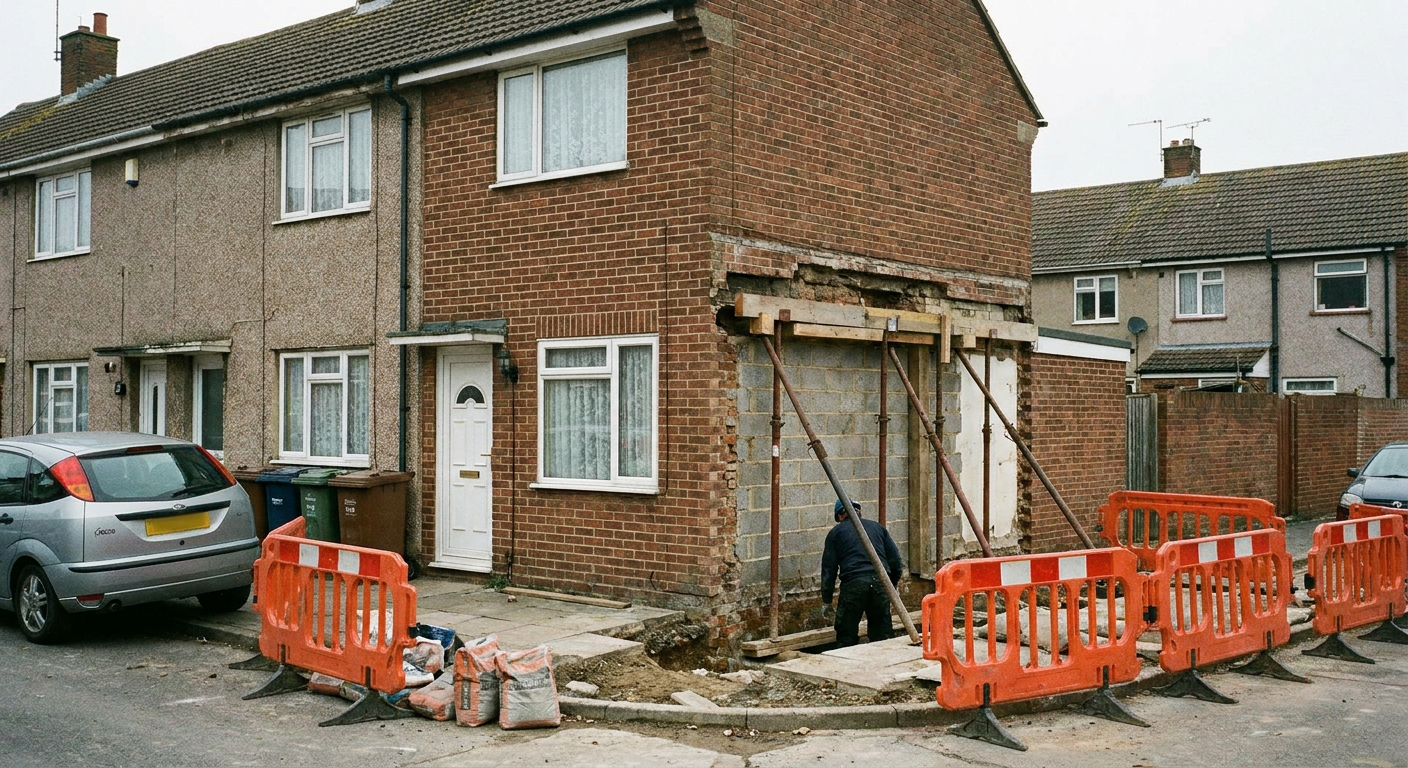
Trial holes reveal whether the clay has softened, whether voids exist, or whether the original builders placed the foundations deep enough to reach stable ground. In older parts of Preston, Victorian and Edwardian houses often have shallow brick footings resting directly on the till. These were adequate when built, but changes in drainage or nearby tree planting can destabilise them decades later.
Monitoring is frequently the next step. Crack monitoring gauges fixed across a fracture track whether the movement is ongoing or has stopped. If the gauges show continued widening over several months, intervention is required. If the movement has stabilised, repair alone may be sufficient.
Repair and underpinning methods for boulder clay
The right repair depends on what the survey finds. If a leaking drain caused the clay to soften, fixing the pipe and repairing the masonry might be all that is needed. Crack repair specialists restore the brickwork and mortar once the underlying cause is resolved.
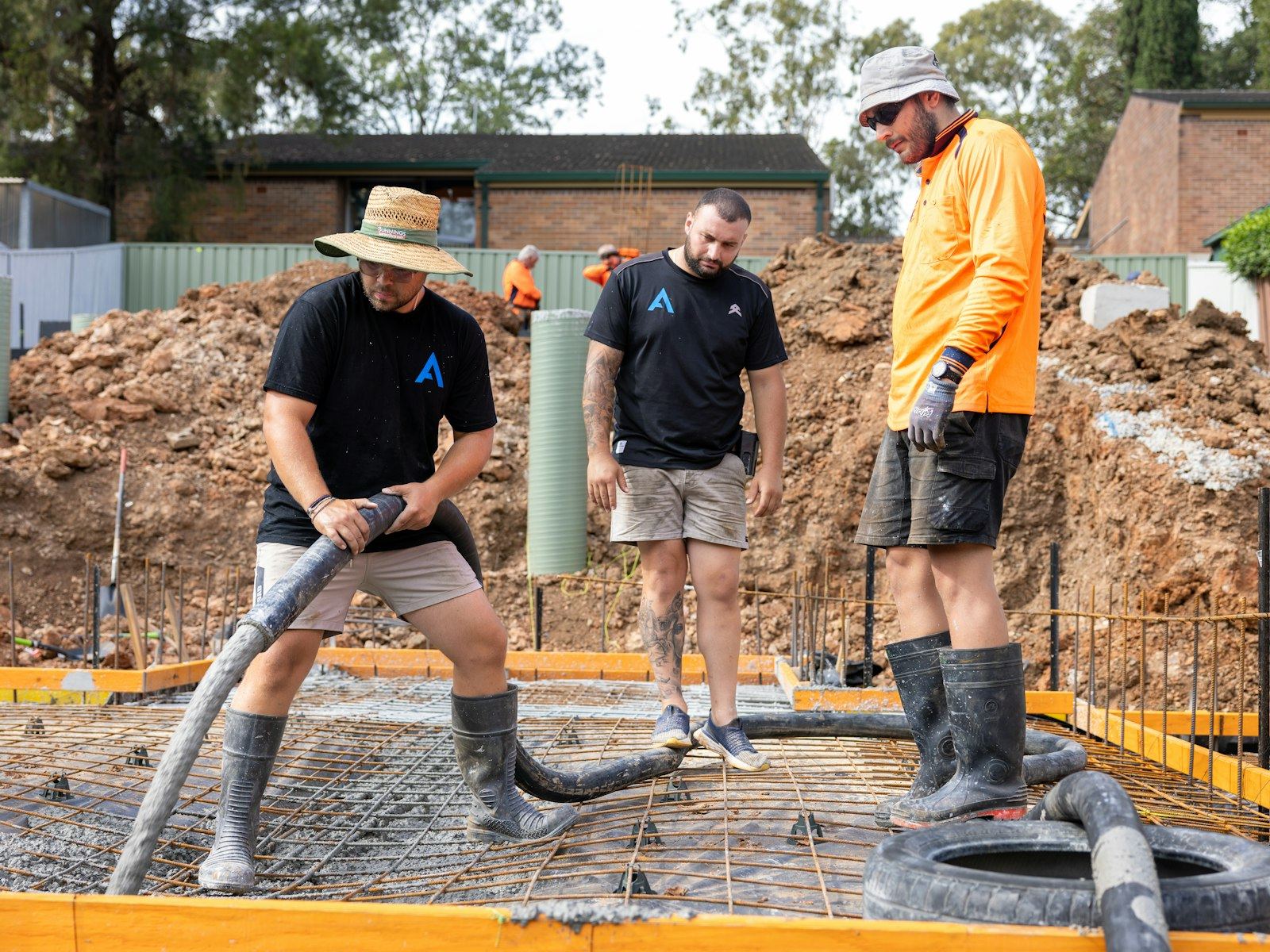
When the ground cannot support the existing footings, underpinning becomes necessary. Mass concrete underpinning is a traditional method used widely on boulder clay. Excavation happens in short sections beneath the wall, and concrete is poured to form a new, deeper base. Because the till is dense, it provides good bearing capacity for the new concrete piers.
Mini piled underpinning is chosen when the boulder clay is too thin or too variable, requiring the load to be transferred deeper into stable strata or bedrock. Steel piles are driven or bored through the glacial deposits until they reach a firm layer. Resin injection offers another option for certain types of settlement, pumping expanding resin into voids within the ground to re-compact loose material and lift sunken slabs. The specialist firm selects the method based on the soil profile and the structure above it.
Ask a specialist about the ground under your home
Send details of the cracks or movement you have noticed. A specialist firm reviews what you describe and advises on the next steps, without obligating you to any work or cost.
- No obligation to proceed
- Free initial advice
- Local ground knowledge